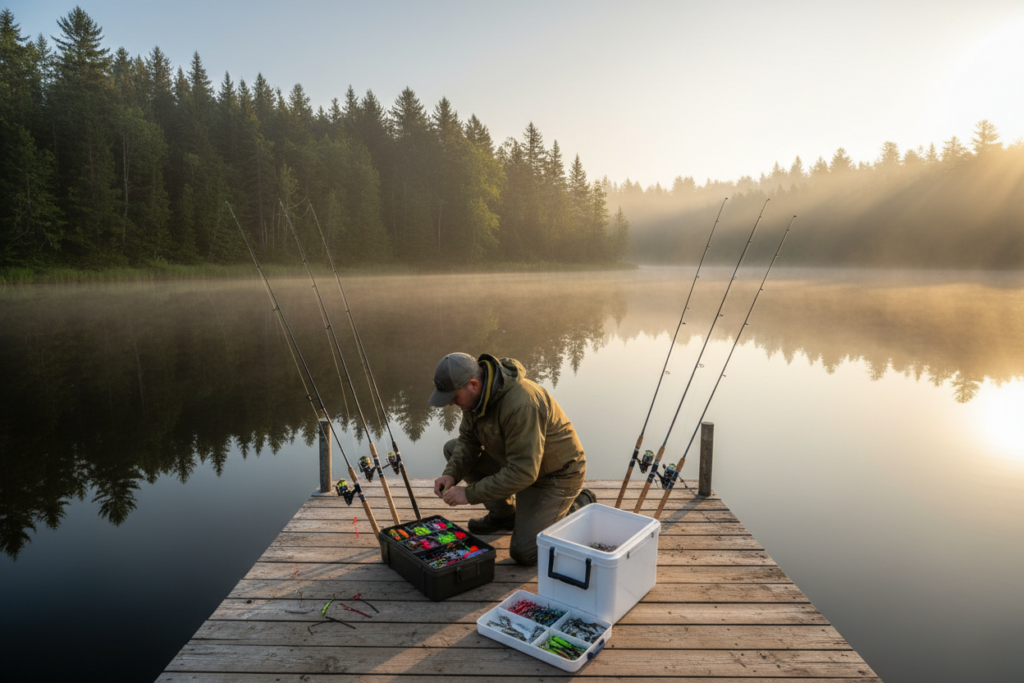
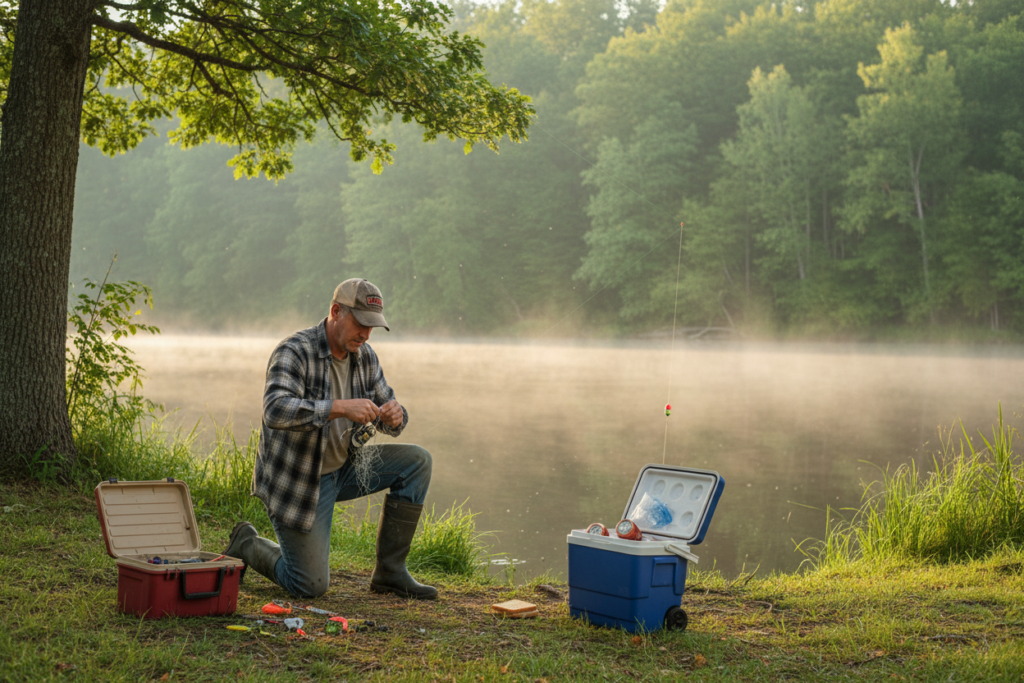
Understanding water clarity fish behavior helps anglers and biologists predict how species move, feed, and respond to changes in temperature and light.
The article outlines key environmental parameters anglers should watch, from visibility and surface light to oxygen and temperature. These factors shape schooling dynamics, swimming patterns, and courtship activity in rivers and lakes.
Clear water often exposes near-surface species to predators and human presence, which can reduce feeding and increase caution. Observers who note color shifts and time-of-day changes gain an edge when selecting tackle and lures.
FishVault provides tackle and gear chosen for varied conditions, helping anglers adapt to changing quality and maximize success. This introduction previews practical tips and science-based insight for better on-the-water decision making.
Understanding Water Clarity and Fish Behavior
Sight range in a river or lake drives where species hold, forage, and avoid risk. Sediment, algae, and organic matter change visibility and shift how bass and other targets pick hiding spots.
Bass Online is a useful resource for anglers who want practical tips on sight-based tactics and lure choice. Anglers who study local conditions can match lures to the scene.
Bass are visual predators that hunt by sight, so visibility is a main factor in daily behavior. In clear water, fish tend to be cautious and favor deep structure to reduce exposure.
“Adjusting presentation to the environment is often the difference between a long day and consistent success.”
- Target species differ in light sensitivity; know the targets before you cast.
- Color and profile of baits should match natural prey when sight lines are long.
- By reading environmental factors, anglers can tell when fish are feeding or holding tight to cover.
How Environmental Conditions Influence Fish Senses
Environmental signals shape how aquatic species sense the world and respond to risk. Vision and motion detection work together to guide feeding, schooling, and escape reactions. Anglers and biologists can read these cues to predict movement and timing.
Vision and Predator Detection
Vision dominates when sight lines are long. In clear areas, bass and similar species rely on visual cues to spot predators and prey.
Without eyelids, many species rest with eyes open and take cover near structure to reduce exposure. Observation of swimming patterns and coloration helps indicate feeding times.
Lateral Line and Vibration Sensitivity
The lateral line is a specialized organ that senses vibrations and movement in the column. It lets species track prey when visibility drops due to suspended particles.
- Bass shift from sight to lateral-line cues in murky conditions.
- Schooling species use synchronized swimming as a defense example.
- Erratic movements often signal stress or poor environmental parameters.
“The lateral line and vision together help species navigate structure and avoid predators.”
Tactics for Fishing in Clear Water
Clear sightlines demand a careful, subtle game plan when anglers target wary species near structure. Presentations must be precise and slow to match natural movement and avoid spooking wary targets.
Finesse Techniques and Lure Selection
Finesse rigs like the drop-shot, Ned Rig, and shakey head excel in these conditions. They allow anglers to work a lure slowly through ambush areas such as submerged logs and weed edges.
For anglers who want faster action, jerkbaits and topwater lures can provoke reaction strikes when used sparingly. Light line and small profiles reduce visible drag and lower the chance of detection.
- Use natural colors that match local prey to increase realism.
- Focus on ambush points where species wait to dash out and feed.
- Keep retrieves subtle to mimic real baitfish movement and trigger strikes.
“A precise presentation in bright conditions often outperforms brute force.”
Attentive casting and patient work pay off when aging conditions reward stealth and accuracy.
Strategies for Stained Water Environments
Stained systems create a sweet spot where visibility and concealment meet, changing how anglers approach their casts.
Stained water is clean but not clear enough to see five feet down. That mid-range visibility often makes many fish more willing to strike. Anglers should focus on shallow areas where species patrol for food.
Contrast matters more than subtle hues in these conditions. Dark or bright lures stand out, so crankbaits, jigs, soft plastics, and spinnerbaits are top choices.
Schooling species often roam more freely when they feel less exposed. That can change feeding and swimming patterns through the day.
- Work shallow edges and points where prey concentrates.
- Vary lure type and retrieve speed to match shifting activity levels.
- Keep monitoring parameters like temperature and oxygen to maintain quality observations.
“A balanced visibility level rewards anglers who match contrast and action to the scene.”
For more tips on adapting to low-visibility spots, see practical tactics for murky conditions.
Adjusting Your Approach for Muddy Conditions
When suspended debris fills the column, anglers must lean on sound, flash, and structure to attract strikes.
Selecting high-visibility lures is the first step. Bright spinnerbaits and lipless crankbaits give flash and profile where sight is limited. Using bold colors helps a presentation register when particles hide subtle tones.
Selecting High-Visibility Lures
Choose baits that combine flash and contrast. A brightly colored spinnerbait or a ChatterBait sends both light and motion cues that nearby targets detect more easily.
Utilizing Vibration for Detection
In muddy conditions, many species rely on the lateral line to pick up movement. Strong-vibration lures like ChatterBaits and lipless crankbaits send clear pulses through the column.
- Vibration helps trigger strikes even when visual range is poor.
- Work near structure where ambush activity concentrates.
- Remember that concealment can let anglers approach closer than usual.
When to Seek Alternative Water
If interest drops or temperatures fall near 50°F, anglers should consider clearer areas with better oxygen levels. Cooler conditions change feeding and schooling dynamics.
Practical example: swap to a bright spinnerbait and favor points and submerged logs. If bites remain scarce, move to clearer sections to restore better sight and activity.
The Role of Light and Temperature in Fish Activity
Brightness and thermal layers shape where and when aquatic species become active.
Clear water warms faster under sun, while murkier water holds heat longer but warms more slowly. High light penetration in clear areas often pushes fish into shaded structure to avoid exposure.
Temperature controls metabolic rate and overall activity. In summer, many species move to deeper structure during midday heat and return shallow at night.
Low-light periods usually produce more aggressive feeding in both clear and stained systems. Anglers who track light levels and temperature raise their chances of success.
“Monitoring temperature and light lets anglers match natural schooling and feeding dynamics.”
- Seasonal changes, like spring runoff or fall cooling, shift movement and spawning timing.
- Understanding light penetration and clarity helps predict times of peak activity.
- Adjust strategy by watching temperature trends and shaded versus sunlit spots.
Conclusion
Key takeaway: Ultimately, success comes from reading the scene and adapting technique as conditions evolve. Anglers who match gear, timing, and presentation to local parameters see more consistent results.
By learning how targets respond in clear, stained, and muddy situations, an angler refines lure choice and retrieves. Paying attention to swimming patterns and subtle shifts in temperature or oxygen helps locate active pockets.
Consistent practice, the right tackle, and steady observation make the difference. For deeper context on how quality and habitat affect populations, consult this study on water quality and habitat.