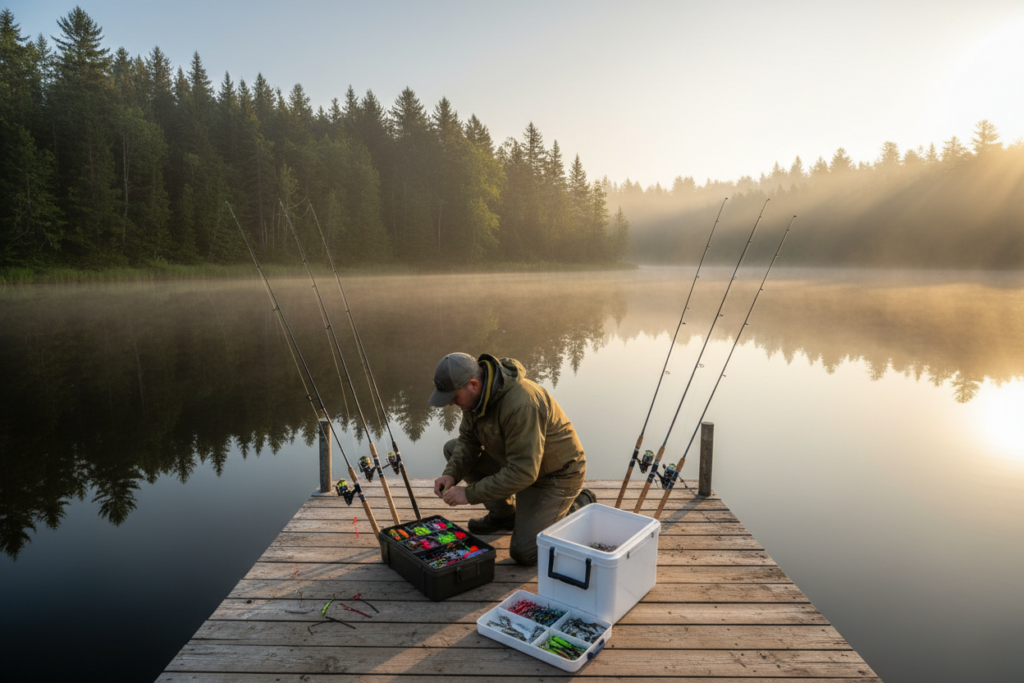
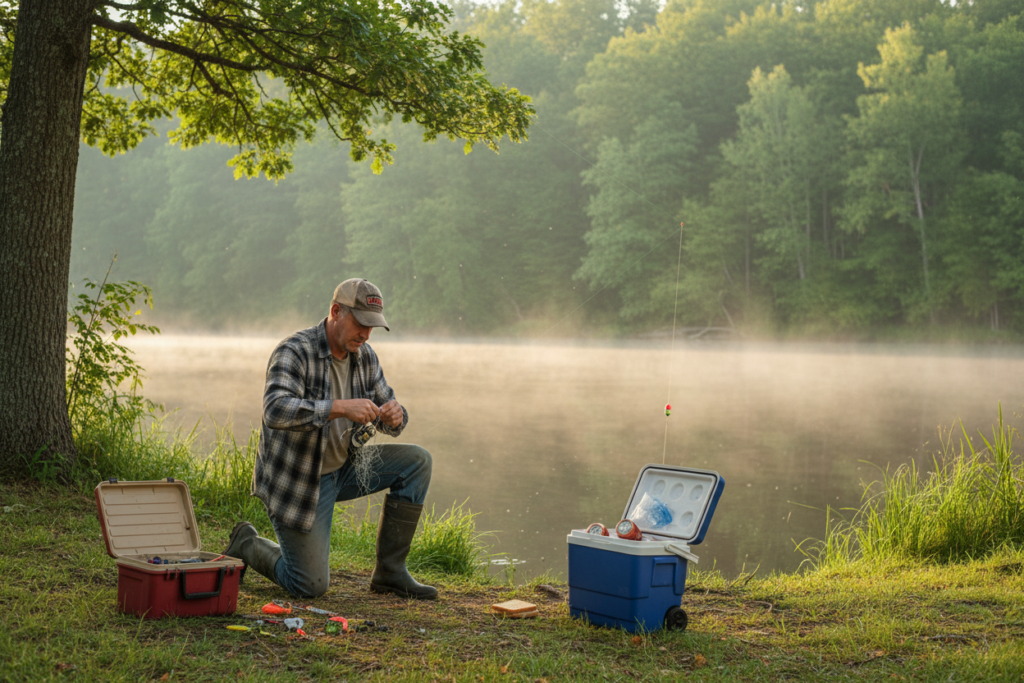
This introduction shows how a calm approach makes time on the water more productive. It outlines simple ways anglers can keep steady focus and avoid frustration.
Choosing the right time of day, like early morning or evening, boosts the chance to catch more fish. Anglers should avoid the hottest midday hours in summer when water temperatures stress the fish.
Good catch-and-release care reduces harm and takes practice. Observing small movements on the surface helps detect nearby fish and keeps attention sharp.
These professional tips turn a slow day into a rewarding way to spend time. For more on the mental side of bass technique and focus, see this mental performance guide.
Essential Preparation for Relaxed Fishing Strategies
The right tackle and sensible timing help anglers land fish with less stress. Small choices before launch save time and reduce harm to the catch.
Selecting the Right Tackle
Choose gear that balances power and finesse. A rod, reel, and braided line from Reaction Tackle give the strength to hook elusive fish while retaining sensitivity.
Using slightly heavier line helps land fish faster and keeps them from tiring. Single, barb-less hooks in the proper size cut handling time and lower injury risk.
- Balanced rod and reel let anglers reel fish in quickly.
- Braided line offers strength without bulk.
- Correct bait or lures match local waters and fish behavior.
- Organized gear on a boat saves time and keeps focus on the water.
Timing Your Outings
Plan trips for dawn or dusk when fish are most active in many waters. Less wind and steady light make it easier to spot movement and cast quietly.
“Fishing success often starts before the first cast — with the right hour, tackle, and care for the fish.”
Mastering Stealth and Patience on the Water
Quiet moves and careful timing let anglers turn unseen opportunities into steady catches.
Minimize disturbance. Whether in a boat or from the shore, slow, deliberate motions keep surface ripples low and let wary fish stay unaware. Gentle footsteps, soft netting, and calm casting all help.
Use nearly invisible fluorocarbon line from Reaction Tackle to outwit the most vigilant fish in clear water. That subtle edge can make the difference when fish refuse obvious lures or bait.
Practical care pays off. Keep a short journal noting the time of day, weather, lure type, and what produced a catch. Over weeks, patterns emerge and help plan better outings.
- Minimize surface noise from the boat and bait presentation.
- Handle every fish with wet hands and cradle it beneath the belly — never grip the gills.
- If a hook cannot be removed quickly, cut the line close to the hook to reduce harm.
“Patience is the hallmark of a seasoned angler who knows how to wait for the right moment.”
Advanced Tactics for Calm Conditions
Calm water days reward anglers who use subtle presentation and reach fish without disturbing the spot. In waters 10 feet deep or less, keeping distance is essential to avoid spooking wary fish.
Utilizing Slip Float Rigs
Run slip float rigs out 50 feet or more from the boat to reach fish without whipping the rod. A 1/4-ounce egg sinker paired with a slip float gets the bait to the target depth fast.
- Keep the line taut enough to feel strikes but loose enough to let the float settle.
- Use lighter bait and smaller hooks for finicky species in clear water.
On glassy days, long casts beat close-in noise. Using a smooth, controlled cast prevents splashes that scare fish near the surface.
- When the water is flat calm, cast your slip float rig 50+ feet from the boat to avoid spooking fish.
- The Bill Lewis Floating Rat-L-Trap stays on the surface when paused—great for shallow presentations.
- Snap the rod tip with a size 3 Swedish Pimple to mimic a darting minnow and attract perch, walleyes, and smallmouth bass.
Handling Fish with Care
Proper handling keeps fish healthy for release. Never handle a fish for more than two minutes total and use wet hands or a soft net.
- Match hook size to species: size 6–8 for perch, size 4–2 for walleyes.
- Cut line near a deeply set hook rather than forcing removal.
- Polarized sunglasses help spot targets and reduce unnecessary casts from the boat.
“Quiet presentation and correct tackle let an angler outsmart wary fish on calm water.”
For additional pro tips on techniques and the mental game, see this pro anglers’ guide.
Conclusion
Simple routines before and during an outing give anglers the best chance to catch fish and stay focused. Proper preparation—right tackle, timing, and a clear plan—sets the foundation for better results on the water.
Stealth, patience, and refined rigs help convert quiet hours into consistent catches while reducing harm to the environment. Handle every catch with wet hands and aim for fast release to protect fish health.
These professional tips form a compact guide to improving skill and enjoying each trip. Keep a short journal and practice regularly to build confidence and learn what works over time.