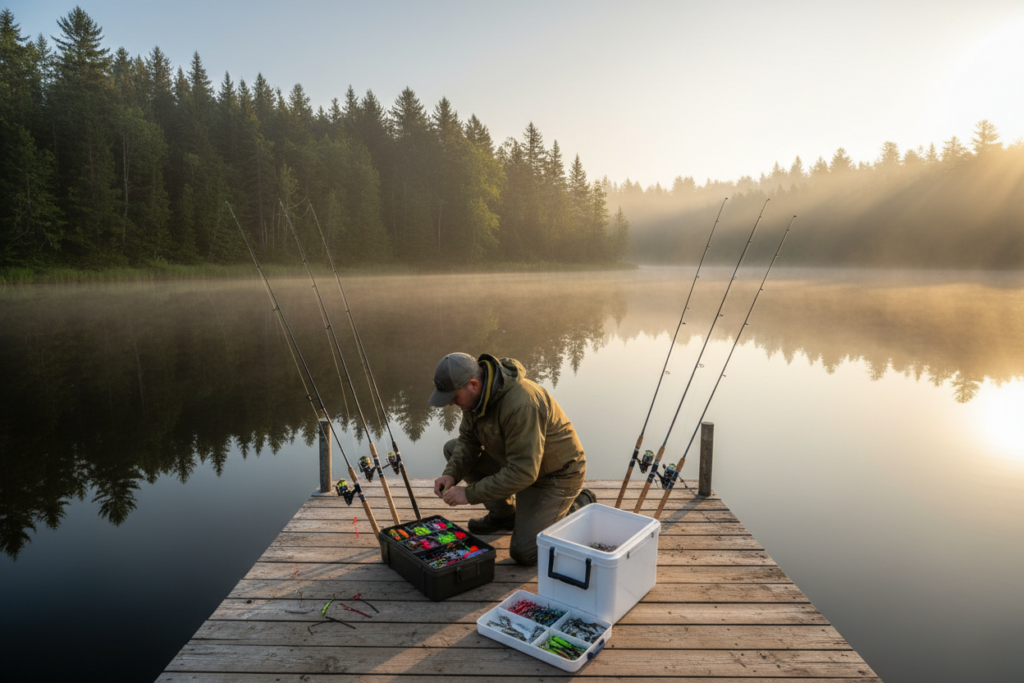
New anglers often face small errors that cut down time on the water and lower success. This introduction highlights common freshwater issues and shows how to fix them. It sets the stage for clear, practical advice.
Many people overlook tiny habits that hurt results. Simple tweaks to gear, timing, and approach can raise the number of fish they land. The goal is to remove guesswork and build consistent wins.
This short guide gives beginners focused tips to improve skills. It helps anglers spend less time troubleshooting and more time making casts that lead to a catch. Readers will gain confidence and a better routine for each outing.
Understanding Timing and Environmental Conditions
Timing and local conditions often decide whether a trip yields plenty of bites or leaves an angler empty-handed. Attention to season, temperature, and weather helps anglers pick the best spots and adjust techniques.
Seasonal Patterns
Many species change areas across the months. Bass move to shallow zones in spring for spawning and head to deeper water in summer and winter.
Catfish become more active at dusk, while bass often peak in early morning and late afternoon. Knowing these shifts improves the chances of success.
Water Temperature
Water temperature drives how fish behave. Cooler surface temps at dawn and dusk bring fish up near the surface.
When the sun warms the midday water, most fish drop deeper. On overcast days, the surface layer stays comfortable longer, making it one of the best fishing times for many species.
- Tip: Check local weather and temperature forecasts before heading out.
- Example: If targeting bass, match location and retrieval speed to the season.
Common Freshwater Fishing Mistakes Regarding Gear Selection
Choosing the wrong tackle often turns a promising trip into a day of frustration. Anglers must match lure size to the mouth size of the target fish to land more bites.
Practical choices matter: largemouth bass often respond best to a jig, while trout typically take a spinner. Beginners should start with a solid rod and reel combo suited to the species they plan to target.
Water clarity changes which lures work. Darker lures stand out in murky water. Natural colors perform better in clear water.
- Don’t use a hook that’s too large—wrong hook size costs strikes on a trip.
- Carry several baits and a variety of tackle so you can adapt quickly.
- Know the difference in lure sizes: larger lures often excel during aggressive fall months.
Tip: Check seasonal behavior and update gear for colder months to avoid common fishing mistakes.
The Importance of Proper Line and Hook Maintenance
Proper care of line and hooks makes a major difference in how many fish an angler lands. Good maintenance saves time on the water and reduces gear failure.
Selecting the Right Line
Choose a line that matches the species and water conditions. Braided line offers low stretch for heavy cover, while monofilament is forgiving on light presentations.
Example: use a 10-pound line for general bass work, and check the reel spool before each trip.
Hook Sharpness and Quality
Run the point across your thumbnail to test sharpness. If it does not catch, sharpen or replace the hook.
A circle hook suits catfish, while a straight shank is a strong way to target bass.
Proper Drag Settings
Set the drag to about 20–30% of the line’s breaking strength. For a 10-pound line, that equals roughly 2–3 pounds using a scale.
- Tip: Inspect tackle regularly to avoid failure during a fight.
- Sunlight and salt can weaken fishing line; store gear out of direct sun.
- Make sure the reel drag is tested before you cast.
Mastering Casting and Retrieval Techniques
Precision in each cast often makes the difference between a quiet day and steady action on the water. Distance and accuracy decide whether a lure lands in the strike zone or drifts past unseen.
Wind changes everything; anglers must alter cast angle and power to counter gusts. Practicing short, targeted casts to specific points will build reliable aim.
If a lure is not getting bites, they should vary retrieval speed and depth. Small adjustments often trigger a response when everything else seems right.
“Mastering your rod and reel gives you control over presentation and timing.”
Safety note: avoid high-sticking the rod near the surface. Respect the rod’s strength to prevent breakage during a fight.
- Use the right tackle and rod for distance to reach deeper or distant spots.
- Focus on casting accuracy before power; precise placement beats long, wild casts.
- If conditions shift, change your cast style and try different lures or hook sizes.
For anglers who want a deeper look at common technique errors, see this guide on common bass errors for practical tips.
Handling Bait and Your Catch Effectively
Small choices at the boat’s rail determine whether a catch becomes a table-worthy fillet. Immediate care for live baits and landed fish preserves flavor and shelf life.
Processing Your Catch
Keep live baits healthy by avoiding overcrowding in the livewell. A good rule is one gallon of water per bait kept alive.
Bleed the catch right after landing to prevent blood from changing the meat’s taste. Use a sharp knife and follow the backbone as a guide to avoid waste.
- Manage ice: pack about one pound of ice per pound of fish to chill quickly.
- Boat prep: gut fish on the boat when possible to keep the prep area clean.
- Rinse correctly: if you caught saltwater species, rinse filets with seawater, not freshwater.
Example: a quick bleed, a clean cut along the backbone, and firm icing will make the difference between a good meal and disappointment.
For more on proper handling techniques and how to hold a catch safely, see proper ways to hold a fish.
Avoiding Physical and Safety Pitfalls on the Water
A single snap of a rod or a slipping knot can turn a good outing into a costly lesson. Anglers should stop high-sticking immediately and keep the rod at a safe angle to prevent breakage and harm.
Before heading out, they should plan for comfort. Take anti-nausea medicine if the trip might cause seasickness. Avoid greasy or spicy food the day of the trip to lower the chance of getting sick.
Inspect every knot and crimp on the line and terminal tackle. A slipping knot often causes lost trophies and wasted effort. Set drag and test hardware before casting.
- Safety first: beginners must learn to avoid high-sticking and use proper lifting technique.
- Know the area: check weather, currents, and local locations to plan a safe boat route.
- Right gear: choose suitable tackle and baits to keep control during fights and reduce accidents.
Working smart and staying aware improves the overall experience and helps protect life, gear, and the catch.
Conclusion
Simple habits—checked gear, sharp hooks, and tuned reels—add up to better outcomes. Using the right line and a well-set reel keeps fights fair and reduces lost catches. Proper gear choices make each cast count.
Practice with baits and lures, maintain the fishing line, and learn when to change pace. Small checks on hooks, knots, and bait will improve how many fish respond.
By applying these tips from the guide, anglers can make the best fishing of each trip. With patience, attention to detail, and steady time on the water, they will see more catch and enjoy safer, more productive days on the boat.