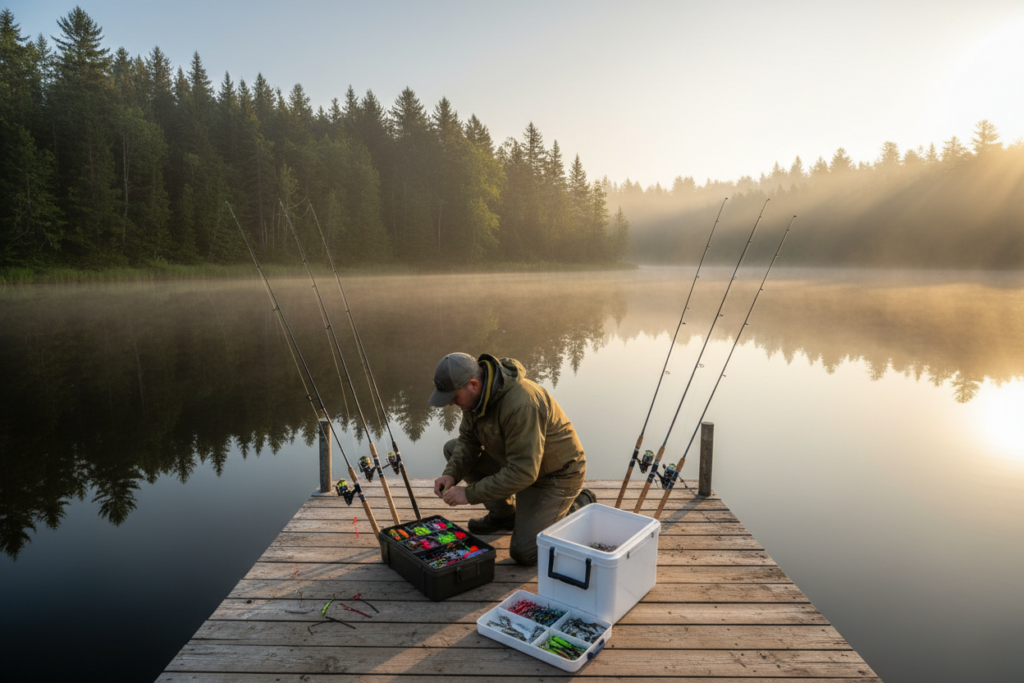
With 40 million participants across the U.S., choosing the right equipment matters. Anglers who learn simple setups avoid tangled line, broken rods, and wasted time on the water.
Beginners gain confidence by matching rod, reel, and hooks to the species and lake they target. Clear choices for tackle and bait reduce common mistakes.
Proper care and basic checks—like inspecting knots, testing the drag, and choosing the right lure—cut failures during a trip. That keeps more fish hooked and lowers repair needs.
This guide focuses on straightforward ways to manage bobbers, organize equipment, and pick the right worms or artificial baits. The goal is safer, more productive days and better overall success.
Essential Freshwater Fishing Gear Tips for Beginners
A compact, forgiving rod paired with an easy-to-use reel helps novices build skills on the water. Keeping equipment simple lets a new angler focus on casting, knot tying, and reading conditions without extra trouble.
Choosing the Right Line
Start with a 6’6” spincast rod and a 150-size spincast reel for most lakes. This combo is forgiving and easy to handle for beginners. Use 10 lb. monofilament as the standard fishing line because it casts well and holds knots securely.
Protecting Your Equipment
Store hooks and lures carefully to avoid dulling points and tangled leaders. A small tackle box with dividers keeps lures accessible and prevents damage.
- Rinse and dry spinning rod and reel after each trip to prevent corrosion.
- Inspect knots and replace weak line to avoid lost fish or broken rods.
- Choose the right hook and lure combo to reduce snags and improve catch rates.
Proper care extends the life of rods and reels and makes every outing more productive.
Selecting the Right Rod and Reel Combinations
Selecting a balanced rod and reel gives anglers better control over distance and presentation. A matched combo affects accuracy, casting distance, and how well an angler feels a bite. Beginners often learn faster with a forgiving spinning rod paired to a mid-size reel.
When a quality rod reel setup is matched to the target species and water, bait presentation improves. That helps place lures near structure where fish hide. Proper action and power let anglers handle different fishing line types with fewer tangles or breaks.
Practice with a versatile spinning combo to build muscle memory for casting and retrieval. Many experienced anglers recommend starting with that setup to learn mechanics and refine techniques.
- Balance rod action with reel size to improve casting control.
- Choose a combo that works with common line strengths to reduce breaks.
- Consistent practice leads to better accuracy and confident presentations.
For a deeper guide on matching rod and reel, see choosing the best freshwater rod and.
Managing Your Tackle and Terminal Gear
A neat tackle setup makes changing rigs faster and keeps anglers on the water longer. Proper organization reduces lost time and helps maintain line health. It also improves safety when moving between spots.
Organizing Your Tackle Box
The Urban Angler Backpack is a practical choice for tidy storage. It fits trays for hooks, sinkers, and lures so each part is easy to reach.
Categorize worms, lures, and hooks by type. That makes strategy shifts fast when the fish change bite patterns.
Using Sinkers and Floats
Pick the correct sinker weight to keep bait near the bottom without dragging. Choose bobbers and floats that match water depth to present bait naturally.
The Role of Swivels and Snaps
Swivels and snaps prevent line twist from spinning lures and make lure swaps quick. Keep several sizes in the box to match line and rod power.
- Store sharp hooks securely for safety.
- Keep spare fishing line and a small tool kit ready.
- Organized tackle saves time and increases time spent casting and catching fish.
Strategic Approaches to Scouting Fishing Locations
Scouting a new lake begins with quiet observation of surface patterns and shoreline structure. Anglers who spend a few minutes watching the water often spot current seams, bait schools, and shaded pockets where fish gather.
Look for structure: logs, rock piles, and weed edges are prime holding spots. Changes in bottom depth, like ledges or drop-offs, tend to concentrate species during the warm part of the day.
Pond and Lake Fishing Tactics
Cast near submerged structure to present lures and bait where ambush predators hide. Use a light line and a balanced rod setup to improve presentation and reduce snags.
Whether from a boat or the shore, mapping shoreline contours increases productive time on the water. Rainy days often stir activity; anglers report better bite rates after cooling rains.
For detailed scouting methods and local reporting, consult a trusted guide to scout new locations at scout new locations.
Adapting to Seasonal and Weather Conditions
Being ready for sudden weather changes—by layering clothing and carrying a packable rain suit—lets anglers stay on the water longer. The AFTCO Transformer is a compact rain suit that keeps beginners dry during unexpected storms and rainy days.
Adjust timing in cold months. Fish metabolism slows in winter, so plan outings for the warmest part of the day to improve catch rates. In summer, sun protection improves comfort and the overall experience.
Watch water temperature and seasonal trends. These guide bait choice and where species hold. Overcast days often produce more active fish, making trout and similar types easier to target.
- Layer clothing for changing temperatures during a long day.
- Carry a spare jacket or the Transformer for rainsoaked trips.
- Monitor temperature and adjust line and bait presentation to match behavior.
Prepared anglers, whether on a boat or the bank, spend less time packing up and more time casting.
Conclusion: Mastering Your Fishing Experience
Small routines—like inspecting line and organizing a tackle box—shape more successful days on the water. Consistent practice and learning from experts, such as the Louisiana Charter Boat Association, speed skill growth for beginners and seasoned anglers alike.
Preparation matters: check reels, knots, hooks, and bait before launch. Apply practical gear and safety checks to reduce problems and focus on catching fish with a favorite rod and reel.
Respect the environment and keep learning new ways to cast, rig, and read conditions. That approach builds confidence and long-term success in freshwater fishing and improves every outing.