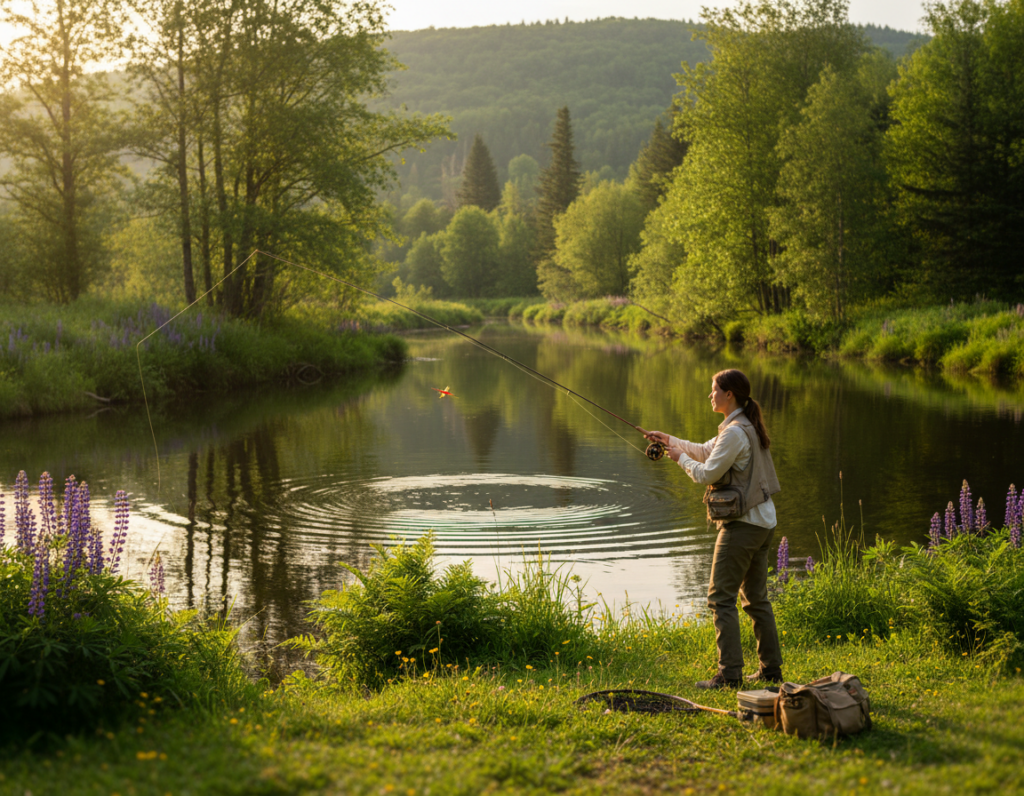
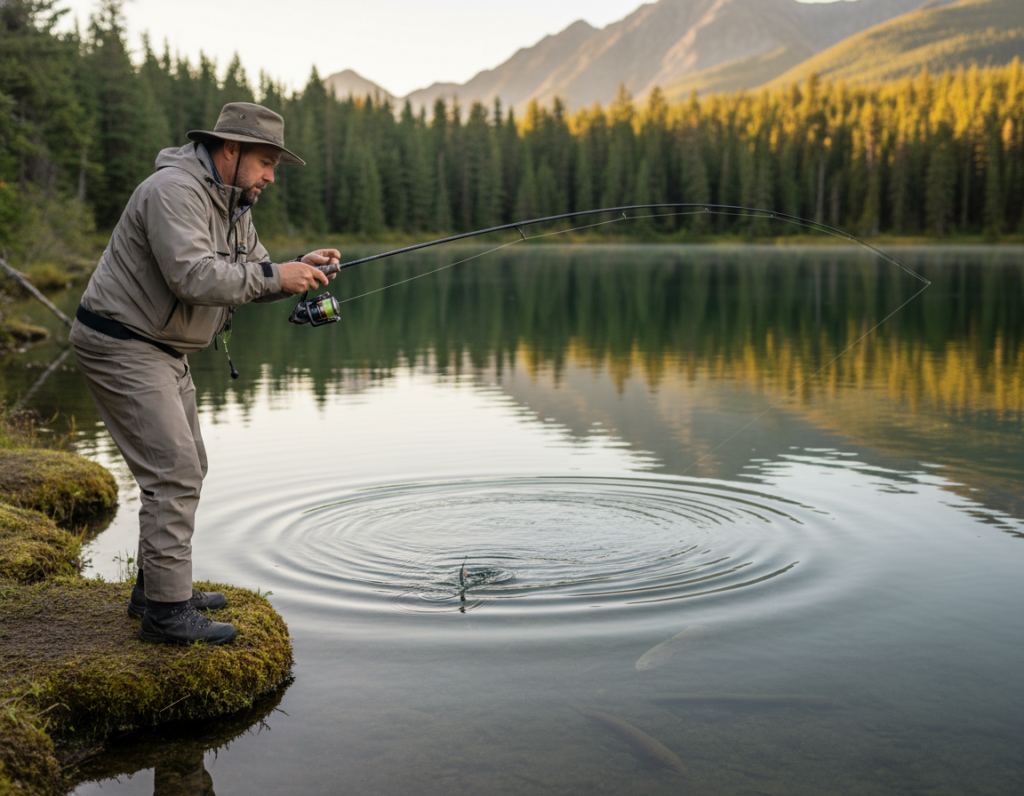
Frank Scalish of Ohio has spent his life mastering how to read the bottom and find productive spots. He shows that knowing the lake bottom turns a wide, confusing expanse of water into clear places to catch fish.
The core idea is simple: structure means the physical bottom shape, while cover means plants, wood, or stumps that sit on it. Understand that difference and you improve your chances to locate bass and other species.
This short guide gives practical information on how natural lakes, rivers, and reservoirs demand different tactics. Learn to read depth changes, edges, and habitat shifts. Use tools and observation to mark likely spots.
For a deeper primer on tactics from experienced anglers, see this structure fishing guide.
Understanding the Basics of Fishing Near Structures
Reading the underwater shape gives immediate clues about productive habitat. Use a sonar like the Lowrance HOOK Reveal 5 Fish Finder to see CHIRP detail and DownScan images that reveal bottom contour and cover. This makes ledges, humps, and holes obvious on the screen.
A ledge is a distinct change in depth that marks a drop toward deeper water. Fish often use that edge as a travel route between shallow and deep parts of a lake.
Humps are underwater highs surrounded by deeper water. They concentrate bait and become ambush points for bass and other hunting species.
Holes are deep pockets in the bottom that hold bottom-dwelling species. When you find any of these types of places, take the time to work them thoroughly.
- Visualize contours with a fish finder to pick the most promising lines.
- Focus on the transition line where depth, cover, and bait converge.
- Position the boat so your lure tracks the target part of the spot with controlled casts.
Distinguishing Between Structure and Cover
Recognizing contours and plant lines narrows your search dramatically.
Defining Physical Features
Structure refers to changes in bottom contour such as ledges, humps, and holes. These are depth changes that guide how fish move through the water.
Paul Crawford points out that a subtle change in the bottom can alter behavior. Even a small lip or channel will act as a travel route for many species.
The Role of Vegetation
Cover includes weed beds, stumps, and grass that offer shelter and feeding zones. A weed bed that ends at the lip of a depth change creates a high-value edge.
“Structure is the contour; cover is the objects on it.”
That example explains why a point with grass terminating at an edge is a top spot for bass and other hunting fish.
- Use sonar to map contour and mark where cover meets a depth change.
- Focus on the edge where bottom, weed, and bait converge for best results.
- Combine both elements to reduce search time and increase productive casts.
Analyzing Different Water Environments
Different water bodies create distinct habitats that demand their own tactics. Read the interplay of depth, cover, and forage to predict where fish will feed at a given time.
Natural Glacial Lakes
Glacial lakes like Lake Champlain offer diverse offshore structure with rockpiles and grass flats. These places attract both smallmouth and largemouth bass.
Work points and flats where weed ends at a drop. That edge often concentrates bait and makes the bottom a hunting zone.
River Systems and Current
Current controls position in a river. Faster current can push fish shallower, especially in dirtier water.
Focus on seams, tailouts, and secondary eddies where forage collects and predators rest out of the main flow.
Reservoir Thermoclines
Reservoirs often have long ledges and miles of river-like drops. A thermocline is a distinct temperature layer that fish usually avoid below.
Use sonar sensitivity to spot the fuzzy thermocline line and mark depths to target. Keep in mind the thermocline can shift between areas of the same lake, so check multiple spots.
“Analyze water clarity and forage to better predict feeding areas throughout the day.”
- Glacial lakes: rockpiles + grass flats = mixed habitat.
- Rivers: current dictates shallow or deep fish position.
- Reservoirs: monitor thermocline depth and long ledges for concentrations of fish.
Identifying Prime Fishing Spots Using Technology
High-resolution charts and side imaging reveal the subtle features that hold fish.
Lowrance Elite-9 Ti2 gives a continuous readout of depth and shows contour changes as you move. That makes ledges, humps, and holes obvious so you can target the exact edge where bass and other species sit.
C-Map Genesis adds detailed hydrographic maps that clarify bottom contour across any lake or reservoir. Use a GPS chartplotter to mark waypoints on productive spots so you can return with confidence.
- Side imaging lets you idle and scan wide areas to find the “spot on the spot” before you cast.
- A sensitive depth finder helps detect the thermocline and temperature breaks that affect where fish hold.
- Combine maps, sonar, and behavior cues to pick likely habitat and the best presentation angle from the boat.
“Use electronics as a guide, then apply observation and timing to convert a mark into a catch.”
For a technical primer on mapping tactics, see fishing charts explained.
Essential Gear for Deep Water Success
Choosing tools that work at depth makes the difference between marking fish and catching them.
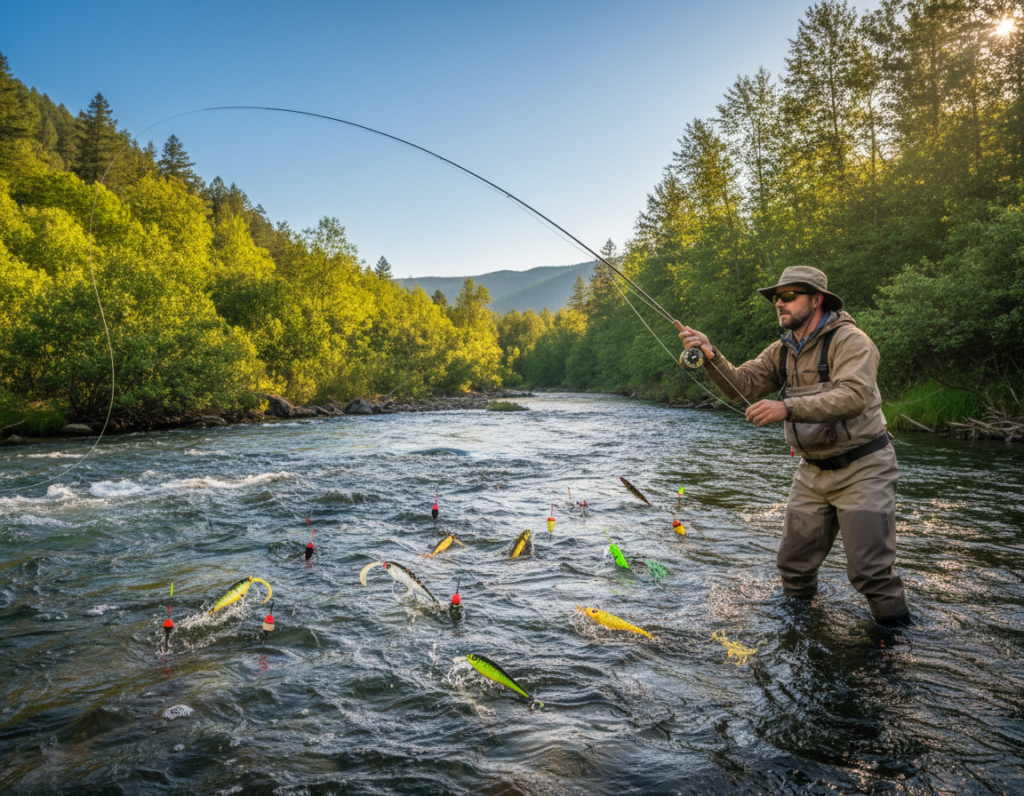
Select lures that reach and hold the target depth. Big deep-diving crankbaits, Carolina rigs, football jigs, drop-shot rigs, and vertical spoons are proven options for deep water. Match lure weight and line to stay in the strike zone.
Colors matter at depth. Keep it simple by matching the water or the lake bottom. That approach helps the lure look like natural forage and triggers strikes from suspended and bottom-oriented fish.
Selecting Effective Lures
Vertical spoons excel for horizontal presentations when fish sit off the bottom. Carolina rigs and drop shots let you present near depth breaks and edges without snagging cover.
- Stock your tackle: deep-diving crankbaits, football jigs, Carolina rigs, drop-shot rigs, vertical spoons.
- Enhance habitat: artificial fish habitat from Fishiding.com can improve spots that lack natural cover.
- Electronics: a bow-mounted depth finder with a trolling-motor transducer gives precise readings of bottom contour and depth under the boat.
Mastering Presentation Angles and Techniques
How a lure arrives at the target can be as important as the lure itself.
Change your casting angle to find the one the local fish prefer. Cast from different sides of a point or ledge and note which approach triggers strikes.
Use a long Carolina rig to pop the bait off the bottom. That lets you cover the water column and tempt suspended bass or cruising fish.
Position your boat in deeper water and cast toward the top edge of a ledge. That approach makes fish move up to intercept the bait.
Always watch the bait on the drop. Many bites happen while the lure falls through a depth change or along a cover line.
“Work both the top and bottom edges of a spot to find where feeding is strongest.”
- Vary angle and retrieve speed to match local behavior.
- Fish the bottom edge when you want bigger, less active fish.
- Use side scans and a steady line to present clean through cover and structure.
Environmental Factors Influencing Fish Behavior
Light, temperature, and available forage shape how fish use a spot every day.
Water Clarity and Forage
Water clarity controls how deep predators will sit to avoid light. In very clear lakes, expect marks well down the column along a ledge or drop.
The local forage base — shad, alewives, or crawfish — dictates where fish position on a structure. Match your presentation to that prey and cover the right edge of the habitat.
Seasonal Patterns
Summer stratification creates a thermocline that often holds feeding fish above the colder layer. In fall, turnover mixes the column and can scatter schools.
Simple rule: the colder the water, the steeper the drop you should target to find concentrated fish. Keep mind that the drop and nearby weedline or ledge often hold the most activity.
“Observe clarity, forage, and temperature to predict where species will feed.”
For more detailed tips and waypoint planning, see this sample guide.
Conclusion
, Combine tech, observation, and practice to turn marks on a screen into consistent results on the water.
Focus on the key idea: distinguish contour from cover, then use sonar and maps to find the edge where forage and depth meet. Work that zone with purposeful presentations and adjust for clarity and temperature.
Mastery takes patience. Study hydrographic maps, monitor the thermocline, and vary angles until the approach suits the local behavior of fish. This method applies whether you chase bass in a reservoir or explore glacial lakes.
Final note: treat each waypoint as a clue. With steady practice you will read structure and cover better and turn more marks into bites during every trip.