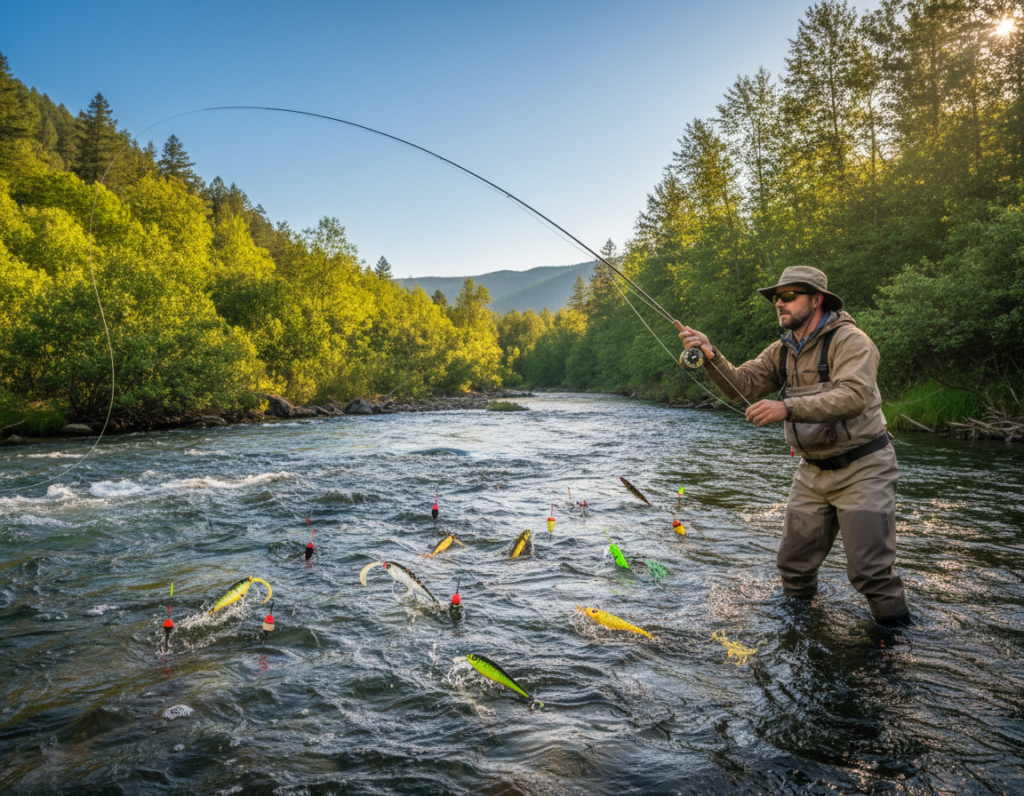
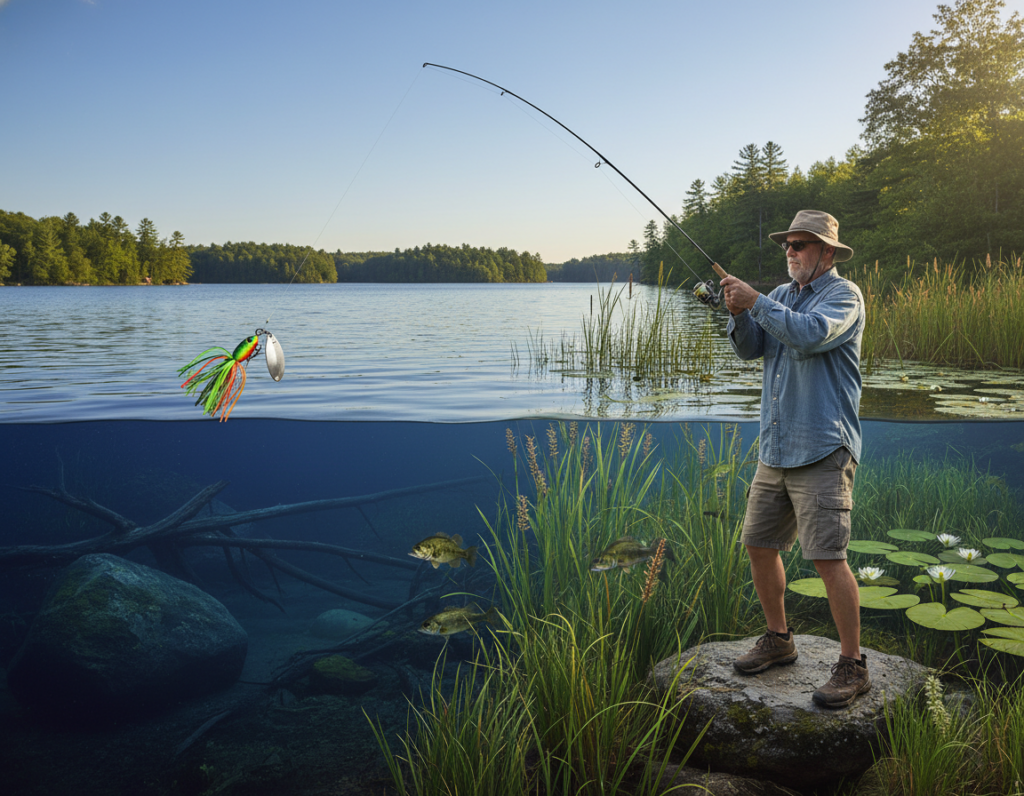
Mastering controlled lure retrieval gives anglers clear control over how a bait moves through the water. Small changes in speed and rod action change depth, cadence, and the way a fish perceives a bait.
Every cast asks a simple question: how will you use your rod and line to make the bait seem alive? The right way to retrieve can spell the difference between a quick tap and a solid strike.
Successful fishing blends technique and timing. There are many ways to vary your retrieve, and finding the best approach takes practice on the water. Adjusting speed and pauses helps match prey behavior and triggers predatory response.
Key takeaways: Learn to control speed, use rod action to add life, and vary your retrieve to influence strike timing. Consistent practice builds the instincts needed for professional results.
Essential Gear for Controlled Lure Retrieval
The right setup turns a good day of fishing into a great one. Start by matching rod length, reel ratio, and line type to the species and water you target. Small choices affect how a bait moves and how quickly you can respond to a hit.
Rod and Reel Selection
Rod length matters. Seven to eight-foot rods give better leverage and help you take up more line on the hookset. They also offer improved control when working lures near structure.
Pick a reel with a gear ratio that fits your technique. High-gear models retrieve line faster, which suits fast-paced presentations and certain fish. Low-gear reels help when you need steady power for heavy baits.
The Impact of Line Diameter
Line diameter changes depth and feel. Thinner lines cut water resistance and let a lure dive deeper. Many anglers now use superbraid for a smaller diameter with high pound-test.
- Choose a seven to eight-foot rod for leverage and control.
- Use high-gear reels when you need quicker retrieves for active presentations.
- Prefer thin, strong line like superbraid to reduce drag and hold depth.
- Look for a sensitive tip to detect subtle taps along the bottom.
For practical retrieve patterns and when to use them, see this short guide on basic techniques: basic lure retrieves.
Mastering Advanced Lure Presentation Techniques
Small changes in rod movement can make a big difference in how fish chase and strike. This section breaks down three practical ways to present baits so you can adapt to conditions and trigger more bites.
Straight and Jigging Retrieves
A straight retrieve is a reliable way to cover a lot of water and locate active fish. Use steady cadence and watch your line for changes in tension.
When jigging, lift the rod from a 10 o’clock to 11 o’clock position to raise the bait off the bottom. That motion often prompts a quick strike from nearby predators.
Twitching for Erratic Action
Twitching uses short, fast pulls of the rod tip to create an erratic action that aggressive fish find irresistible. Keep the rod tip light and let the line play as the lure darts.
Jerking and Sweeping Motions
For jerking, use a longer rod—6 feet 3 inches is popular for muskie jerkbaits—so the tip clears the surface. Move the rod from 9 o’clock to 6 o’clock to make the bait dive or swim sideways.
Practice these ways and switch between straight, twitching, and jerking until you find what works for the day. For deeper technique tips, see this short guide on how to lure fishing.
- Jigging: 10–11 o’clock lift to trigger bites.
- Twitching: short, fast rod tip moves for erratic action.
- Jerking: 9–6 motion; use ~6’3″ rod for muskie work.
Proven Methods for Recovering Snagged Lures
Getting a snag out of cover fast keeps your session productive and your gear intact. Start with gentle moves and avoid cutting line unless necessary.
Slack-and-snap often frees a hook stuck on the bottom. Give slack, then snap the rod tip to send a short pulse. This can pop the bait free without harming your line.
The bow-and-arrow technique uses rod tip tension to pulse the line. Point the rod slightly down, then release a sharp push to dislodge a stuck hook from cover.
- Try a commercial retriever if depth or structure blocks the lure. These tools typically cost between $10 and $40 and work well in deep water.
- Change your angle by moving the boat or shore position. Pulling from a new direction often frees a snag with less stress on the rod and line.
- Wear sunglasses whenever you attempt a snap—hooks can fly to the surface at high speed.
A lot of anglers save money and keep water clean by learning these ways instead of leaving lures in place. For more gear tips, see this short gear guide.
Conclusion: Refining Your Angling Strategy
Refining your technique turns good days into repeatable success on the water. Practice the way you retrieve a bait so it matches natural prey. Keep sessions focused and simple.
Keep a tight line and feel the bottom with gentle rod lifts. That touch helps you detect a strike and set the hook fast. Vary your action between surface work and deeper pulls to test what the fish want.
Use quality gear—a responsive rod and the right line—and give yourself time to experiment. Learn how to free snagged lures and protect the water for others.
Note the exact retrieve that worked and repeat it. Good habits and steady practice make consistent fishing results possible.