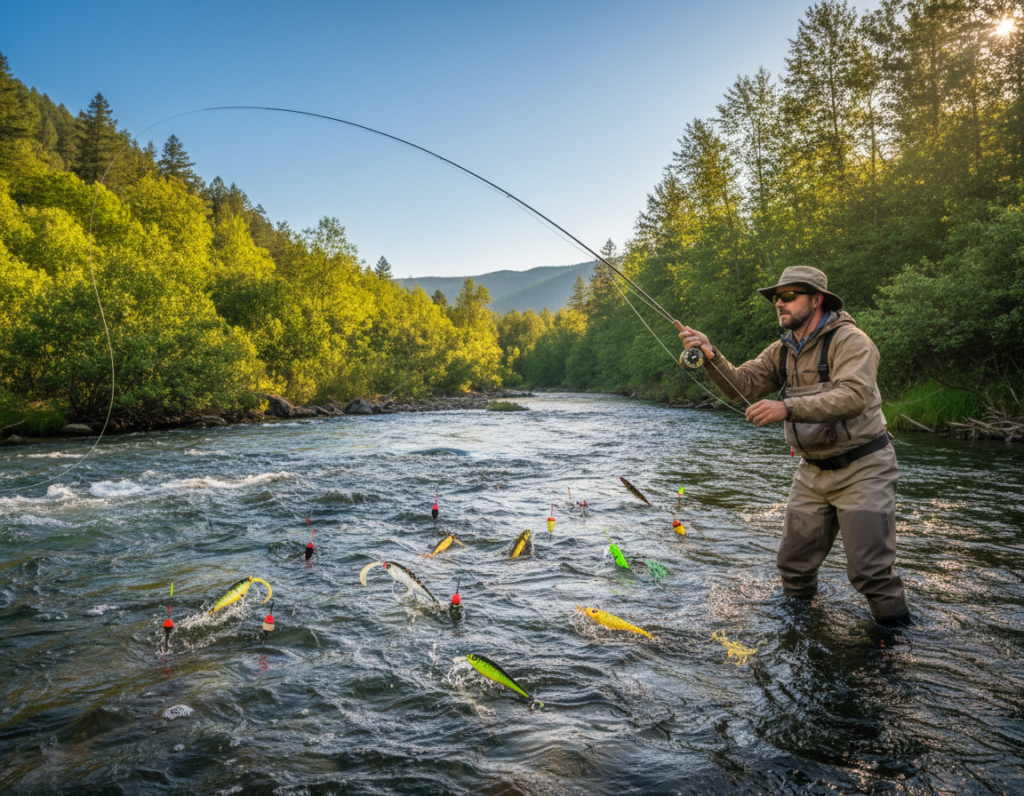
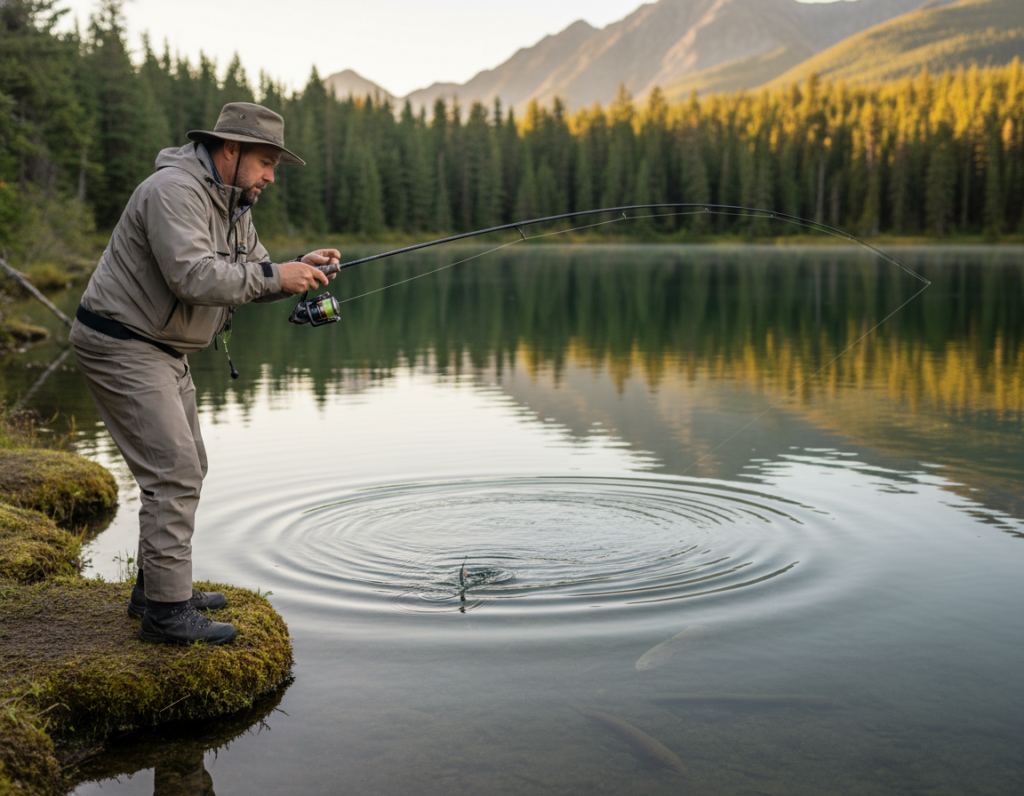
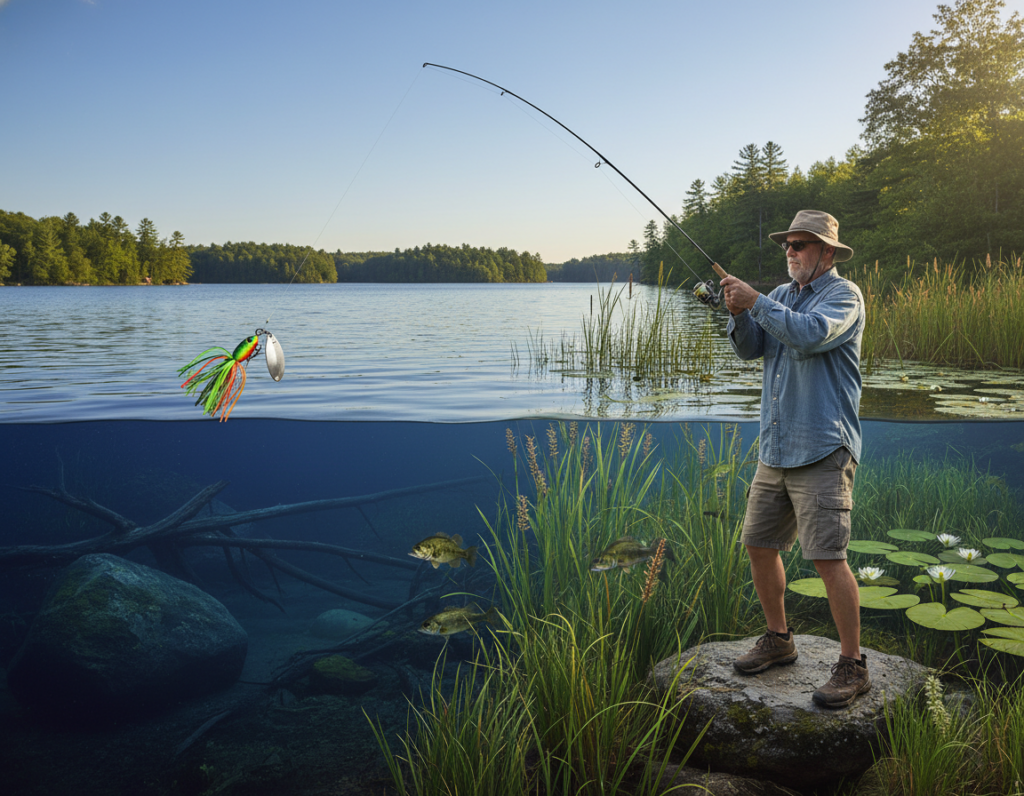
Start simply. Many beginners assume this sport is hard, but small steps make learning a breeze. Focus on a few core techniques and steady practice to build confidence on streams and calm water.
Essential gear for newcomers is straightforward: a balanced rod, matching reel, and a proper fly line. Quality gear beats cheap kits and helps you learn good casting and presentation.
Experienced anglers advise mastering one cast at a time and learning basic knots before you head out. Treat every cast as a chance to connect with nature and to observe how fish react.
For a concise beginner gear guide and setup tips, see this beginner gear guide. It explains rod weights, line types, and simple safety steps to start right.
Understanding the Appeal of Fly Fishing
“Fly fishing provides an intimate connection to the water and the fish you are targeting.”
The attraction starts with that close link to the stream. You feel current, insect activity, and fish behavior through the line and rod. That contact makes each moment on the water immersive.
Fighting a fish on a flexible rod is a distinct thrill. Every surge and turn transfers to your hands. This direct feedback keeps anglers coming back.
When trout key on aquatic insects near the surface or below, this method is often the most successful way to land them. Delicate presentation and precise line control matter more than raw power.
Many people value the peaceful rhythm of wading, the skill-building journey, and the chance to visit beautiful places. A 5-weight rod is a solid all-around size for most freshwater work and matches well with common gear.
- Intimacy with water and fish
- Direct feel through the rod
- Effective when trout feed on insects
- Long-term learning and calm outdoor time
Essential Fly Fishing Basics for Beginners
Begin with a simple setup to understand how rod, reel, and line work as a system. Matched weights make casting and landing fish far easier for new anglers.
Selecting Your Rod and Reel
A 5-weight rod paired with a 5-weight reel and fly line is a great, all-purpose choice. For small trout in tight waters, you’ll want a 3-weight outfit instead.
The Orvis Fly Fishing 101 class is an excellent example of professional instruction that helps beginners handle rod and reel with confidence.
Choosing the Right Flies
Start with a versatile dry pattern like the Adams. Local shops can advise which flies and sizes work best in your area.
“A matched outfit and a small selection of proven flies speed up learning.”
- Make sure rod, reel, and line weights match.
- Use a leader and tippet to present flies naturally.
- Carry a landing net and expect to practice patience when you set the hook.
Mastering the Art of Casting
Learning to cast well starts with steady rhythm and focused drills on dry land. Practicing off the water lets a beginner refine timing, rod control, and line management without pressure.
Practicing on Land
Use a backyard or park as your training area. Place a small target on the grass and aim to land your fly line on it. This builds accuracy and consistency.
Try simple simulations. Tie a piece of yarn to your leader and tippet to mimic flies. It protects your gear and keeps practice low-cost.
- Watch online videos that show weight distribution and rod movement.
- Ask a pro at your local fly shop for quick, constructive tips.
- Choose an open area to avoid snagging brush while you learn.
When you move to water, stay stationary while casting to keep balance and safety. With regular practice casting, the motion becomes second nature and lets you focus on presenting your fly naturally to trout.
Reading the Water and Locating Fish
Reading seams and riffles turns vague guesses into reliable fish-finding spots. Watch how current meets slow water and where debris or weeds collect. Those edges are prime lanes where trout and other fish hold to conserve energy and ambush food.
Identifying Feeding Lanes
Look for seams, pool tails, and breaks in flow. These are natural feeding lanes.
Use your tippet to present flies naturally along those transitions. Amy Williams Ray notes that even in a honey hole, it can take multiple trips to catch fish when you are a beginner.
Understanding Aquatic Insects
A local fly shop can tell you which insects are hatching now. Match the size and type of your pattern to what fish eat beneath the surface.
“Learning the basics of reading the water is a crucial skill that will help you find fish in various streams.”
Safety and Awareness
Make sure to check water levels before wading. Rising water and slick rocks are real hazards.
Practice casting in an open area so you can focus on reading flows without tangles. Respect local rules, pack out trash, and learn from other anglers or a community group to improve your skills.
- Watch flow and seams for holding fish.
- Match flies to current hatches—ask your shop for tips.
- Stay safe: monitor water levels and follow area regulations.
Best Practices for Handling Freshwater Species
When you land a fish, the choices you make matter. Handle trout with wet hands to protect their slime coat. Wetting your palms reduces abrasions and lowers infection risk.
Use a net whenever possible. A rubber or knotless net lets you keep the fish in the water while you ease out the hook. This shortens air exposure and lowers stress.
Land fish quickly and efficiently. Maintain steady tension on the line while guiding the fish toward your net. A calm, controlled retrieval cuts fight time and improves survival after release.
- Match gear to size: choose the proper rod, reel, fly line, and tippet for the species and water area.
- Remove the hook fast: keep the fish in water and use pliers for deep hooks.
- Respect the animal: practice catch-and-release gently so other anglers enjoy the same fisheries.
Watch insect activity at the surface and below to present your flies effectively. These observations help you pick the right size and type of fly and improve hookups while keeping fish healthy.
Conclusion
The path to proficiency grows from steady practice and respect for the water you visit.
Fly fishing basics reward patience. Each short session with rod, line, and reel refines timing and judgment.
Do not be discouraged when a day yields no fish. Even seasoned anglers have quiet days on rivers and calm pools.
Keep honing casts, study insect life, and treat every outing as a chance to learn. The sport connects you to the natural world and gives skills that last a lifetime.