With 40 million participants across the United States, mastering basic preparation makes trips more rewarding. This short guide helps beginners choose the right gear and learn where to look for fish.
The guide highlights common species, from largemouth bass to walleye, so anglers can pick the best spots. It also covers simple gear checks that save time on the water.
Proper prep reduces stress and increases success. By planning equipment, studying local water, and matching tactics to species, a newcomer can enjoy the peaceful side of the sport.
Key benefits: clearer focus, smarter gear choices, and higher odds to catch fish. This introduction sets the stage for a practical, step-by-step guide aimed at confident, safe outings.
– Know your species and spots.
– Pack essential gear and test it beforehand.
– Study local water to boost your chances to catch.
Essential Freshwater Fishing Preparation Basics
Before any trip, new anglers should confirm local rules and carry the proper fishing license to stay legal and safe.
One clear rule: check size and species limits for the lake they plan to visit. This protects populations and keeps the outing lawful.
- Know the rules: securing a valid license and reviewing local limits prevents fines and helps the resource.
- Pick appropriate gear: rods, line, and tackle chosen for target fish make a short day more productive.
- Learn the basics: practicing knots, casts, and safe handling builds confidence for beginners.
Quick research before a trip reduces surprises and improves the chance to catch fish. Simple planning makes time on the water more enjoyable for anglers and preserves the lake for future visits.
Selecting the Right Rods and Reels
A balanced rod and reel combo helps anglers notice subtle bites and keeps them fishing longer.
Spinning Rod Advantages
A 6’6” spinning rod paired with a 2000 spinning reel is an excellent choice for anglers who want to feel quick nibbles on the line. This setup is light, easy to cast, and works well for many species in new water.
Mastering the basics of rod control is vital. Regular practice with a spinning rod improves accuracy and distance. That practice turns more casts into catches.
Baitcasting Rod Performance
Baitcasting rods offer a trigger grip that gives superior control for heavier lures and trophy attempts. When matched to proper lines and a quality reel, a baitcaster rewards skill with longer casts and stronger hooksets.
- Beginner combo: a 6’6” spincast rod with a 150-size spincast reel is versatile and forgiving.
- Balance matters: using the right lines and reels keeps the setup working, reducing time fixing gear.
- Skill growth: consistent practice builds the control needed to land more fish in unfamiliar water.
Choosing Effective Baits and Lures
Picking lures that match local prey makes each cast more likely to produce a bite. Anglers should balance live bait and artificial options to cover different water and species behavior.
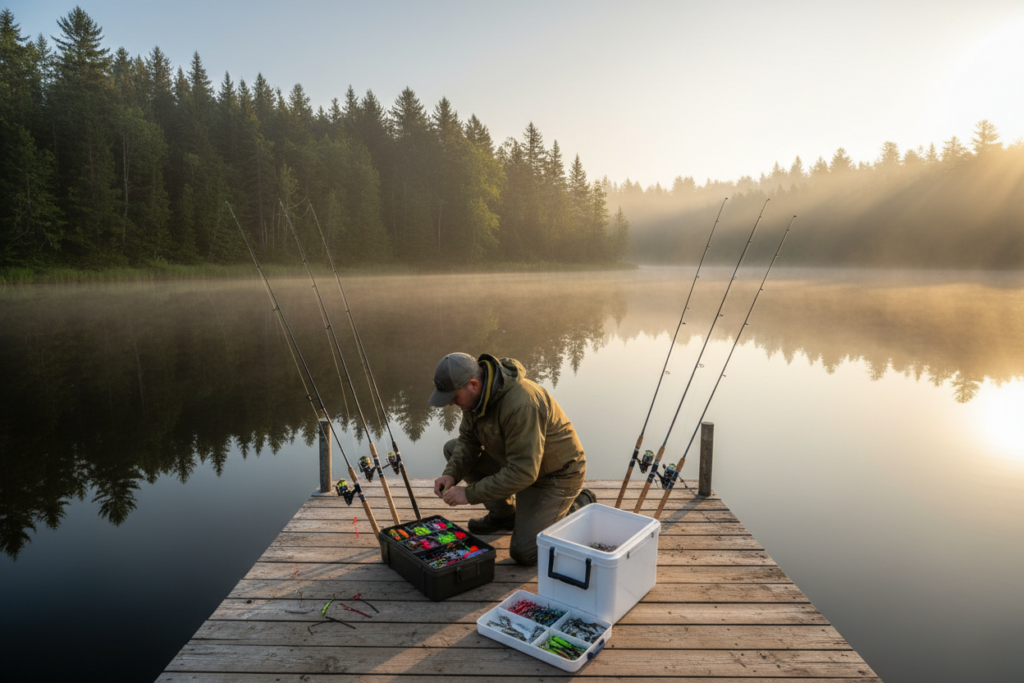
Stocking the tackle box with a few key items reduces guesswork when they arrive at a new spot.
- Carry live options like worms and minnows plus a small selection of artificial lures.
- Use a topwater, a jerkbait, and a crankbait to target bass and other common species in varied water.
- Fit rods with 10 lb. monofilament or nylon line to keep gear reliable throughout the day.
- Pack small hooks and sinkers for natural presentations and to make bait sit naturally near cover.
- Choose a handful of proven lures rather than excess tackle to simplify decisions at times.
Simple setup and focused gear help anglers land more fish and spend less time swapping gear on the water.
Scouting Productive Fishing Locations
Simple observations—weed lines, drop-offs, and timber—reveal where fish like to hold. Scouting productive spots before a trip helps anglers focus casts and saves time on the water.
Use local resources. State DNR pages, lake maps, and a professional guide can point beginners to reliable points. A day with a guide at a place like Duck Bay Lodge on Lake of the Woods gives fast, practical learning.
Look for structure. Whether from a boat or the shore, logs, weed beds, and sudden depth changes often hold bass, catfish, and other species. Those features act like magnets for bait and prey.
- Start with aerial maps or apps to mark likely spots and best times under the sun.
- Bring basic live bait like minnows or worms and streamlined tackle to test different presentations.
- Check licenses and local rules before casting to stay legal and protect the lake.
Small recon runs from a boat can confirm which areas produce catches that day. That targeted approach makes the biggest difference for new anglers learning how to read water.
Understanding Weather and Seasonal Impacts
Shifts in air and water temperature often force fish to move, so adjusting tactics by season pays off.
Reading weather helps anglers plan the best times and gear for a successful trip.
Winter and Spring Strategies
In winter a fish’s metabolism slows. Plan outings for the warmest part of the day to increase activity.
In spring, target transition zones where warming water meets deeper areas. Use subtle bait presentations and light line to entice cautious species.
Summer Fishing Tactics
During hot times fish often move to deeper, cooler water. Slow down retrieves and try deeper-running lures or vertical presentations from the boat.
Sun protection matters on long summer days. Performance shirts like AFTCO Samurai or Air-O Mesh offer UPF 50 to keep anglers comfortable and focused on the rod.
Impact of Rain and Overcast Skies
Rain and overcast skies can improve chances; low light encourages fish to roam and feed near cover.
Carry reliable rain gear and a good rain suit so the line stays visible and attention stays on the bite.
“Wind, cloud cover, and temperature shifts often explain sudden changes in bite times.”
- Quick tips: adjust lure depth, protect from sun and rain, and change retrieve speed by season.
- Gear note: pack a mix of lures and a spare rod to adapt fast.
- Safety: always check local forecasts before a day on the lake.
Mastering Essential Fishing Knots
Tying reliable knots is one of the fastest ways to cut down on lost fish and wasted time on the water.
The Palomar knot is widely regarded as the strongest knot for terminal tackle. With a little practice it can be tied in the dark and still hold under heavy load.
Key points to focus on:
- Mastering the Palomar knot provides a strong connection between line and hook or lure.
- Practice the Clinch knot and the Uni-knot so the angler can adapt gear to any situation.
- The difference between a lost fish and a successful catch often comes down to knot quality and the strength of lines.
When targeting larger species like catfish, the correct knot keeps the lure or hook firmly attached to the main line.
Spend time at home to practice. Short drills with different line types save valuable time on the water and reduce mid-trip fixes.
For step-by-step visuals on tying basic knots, see this guide on mastering basic knots.
Ethical Handling and Release Techniques
How an angler treats a fish in the first thirty seconds often decides its chance to survive. Proper care reduces stress and helps preserve the lake’s life for future visits.
Wet hands protect the fish slime coat. That thin layer shields against infection and parasites after release. Always wet hands or a towel before touching the fish.
Proper Measurement and Care
Make sure the removal is quick. Use barbless hooks or a dehooking tool when the catch will be released. These tactics cut injury and speed the return.
- Have camera and measuring board ready when fishing from a boat to limit air time.
- Support the fish horizontally and avoid squeezing; hold near the head and belly for larger bass or catfish.
- Practice gentle revive techniques: cradle the fish in shallow water until it swims away.
“Practicing these techniques ensures the fish has the best chance of survival.”
Small acts matter. Quick photos, fast measurement, and careful handling make a real difference in catch counts and the health of local water.
Conclusion
Small routines—checking gear, reading the sky, and noting structure—add up to better results.
By following simple tips, beginners gain confidence to explore new spots and enjoy each trip on the lake. They learn how to read water and choose a reliable reel and tackle to improve every cast.
Every outing offers a chance to learn. Anglers should be patient, try different lures, and treat each catch with care to protect fish and habitat.
Whether guided by a professional or fishing solo, these tips help turn time on the water into lasting memories. Practice, respect, and steady effort keep the sport strong for future generations.