Mastering casting accuracy techniques helps anglers reach the right spots and present bait where fish hide.
The right grip, timing, and gear let you send a cast to a specific target without startling fish.
Control matters more than raw power. Proper form lets a lure land softly near cover and holds the attention of wary bass and panfish.
The overhead cast remains one of the best methods for beginners who fish open water. It builds distance and teaches line control.
This guide will break down rod, reel, and line movement so you can improve casting accuracy and achieve better distance accuracy on lakes and rivers.
Understanding the Mechanics of Casting Accuracy Techniques
Small changes in rod angle and tip speed change how far and where your lure lands. This section breaks down the two core mechanical elements every angler must control: rod position and line motion.
The Role of Rod Angle
Hold the rod at about a 45-degree angle for most freshwater situations. A 45-degree position gives the best balance between distance and precision.
Use a medium-action rod when you need both feel and power. It loads well and transfers energy to the line smoothly, helping the rod tip snap forward without stalling.
Importance of Line Speed
The rod tip controls line speed. A faster rod tip extends distance; accelerate the tip smoothly on the forward stroke to avoid jerky movement.
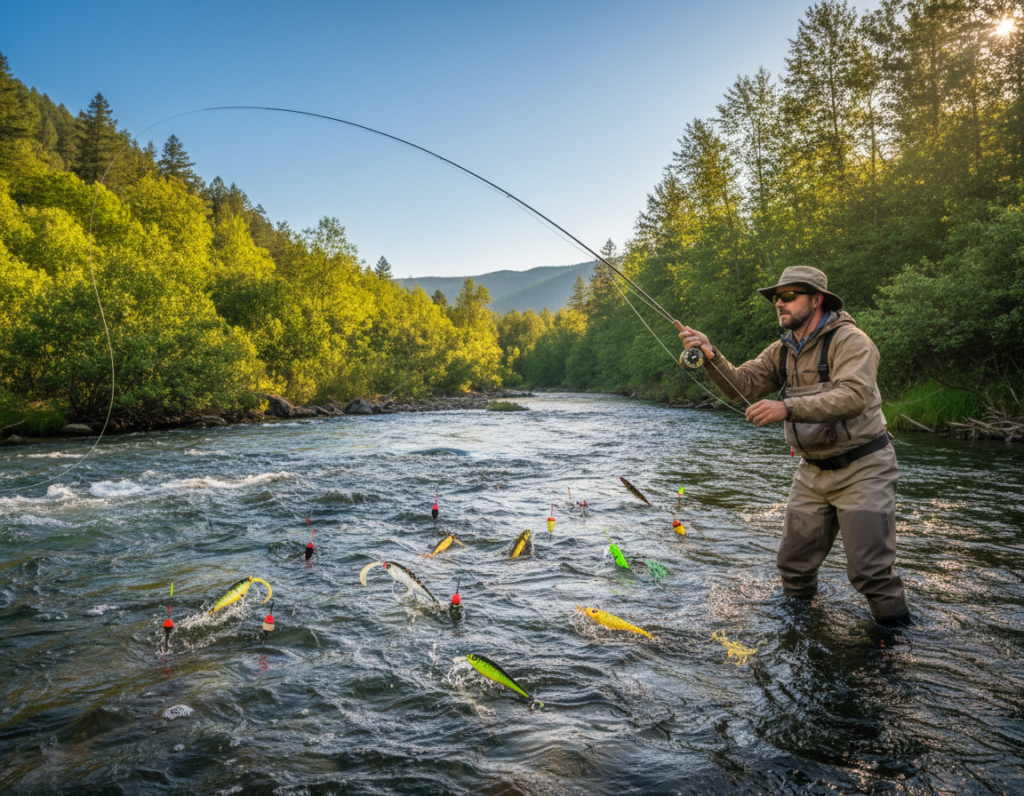
In fly fishing and fly casting, the line weight carries the cast. For spinning setups, proper thumb control on the reel spool and steady tension prevent backlash and keep release consistent.
Quick tips:
- Keep the rod tip moving fluidly in streams and tight water.
- Manage line tension so the rod loads and unloads efficiently.
- Adjust speed and angle to match different distances and situations.
Selecting the Right Rod and Reel for Your Environment
Match gear to place and purpose. A rod’s length and action determine reach and control. Longer rods give leverage for long distance casts on open water.
Shorter rods help in tight spots. For fly fishing under overhang or near brush, a short rod improves line placement and reduces snags.
Material matters. Graphite rods offer light weight and high sensitivity so you feel subtle taps at the tip. Fiberglass rods stand up to heavy use and rough conditions.
Reel and line system: a quality reel maintains steady line tension and smooth retrieval. That stability supports longer casts and cleaner hooksets.
“Match the rod and reel to the water and the fish you seek; the gear should help you, not get in the way.”
- Pick rods for the situations you face: short for tight cover, long for open water.
- Choose spinning or baitcasting based on control versus distance needs.
- Pair a sensitive rod with a reliable reel system to improve overall fishing skills.
Mastering the Overhead Cast for Open Water
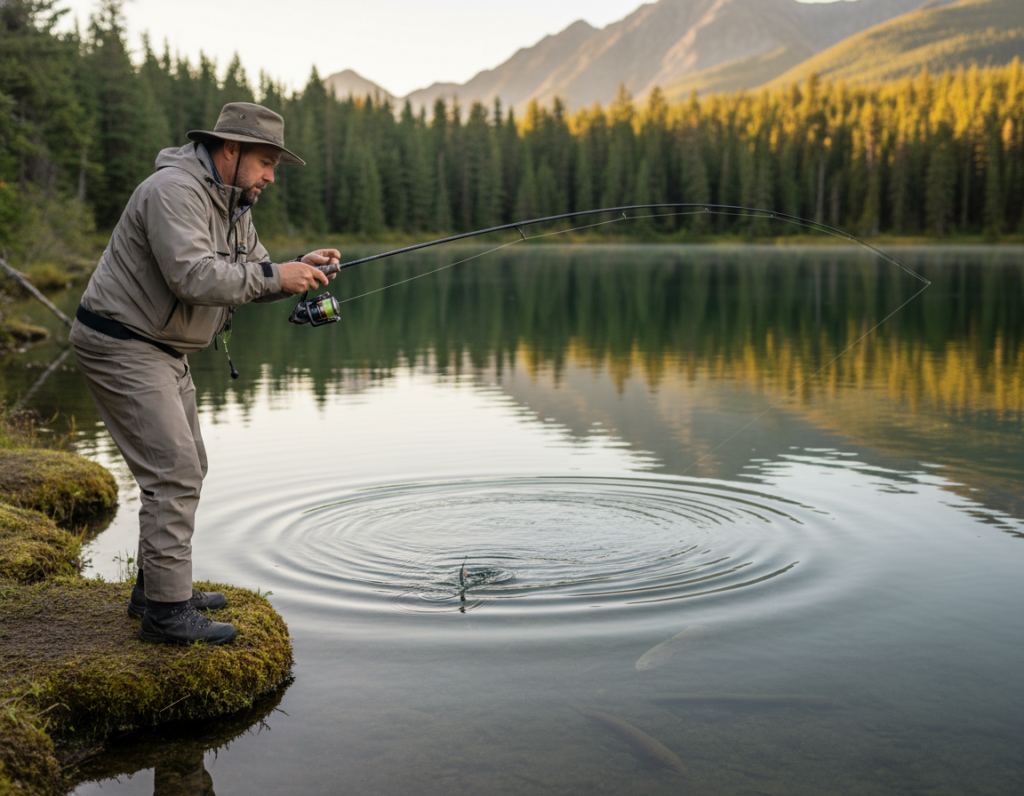
A smooth overhead motion helps you reach open water targets with power and control. Start with a balanced stance and hold the rod with both hands, dominant hand on the reel for control.
Position your thumb over the reel spool to manage the line during flight. Swing the rod back over your shoulder and begin the forward stroke. Release the line when the rod reaches the 10 o’clock point to send the lure toward target with consistent distance.
Why this works: the rod tip points slightly upward, letting the line form a clean arc. That shape maximizes distance on lakes, ponds, and wide rivers where fish feed far from shore.
- The overhead cast is the most reliable method for covering open water and reaching farther distances.
- Keep your thumb on the spool to prevent backlash and keep line control while the cast is in flight.
- Use a steady forward stroke, finish with balance, and follow through toward the target to improve presentation.
“By mastering the overhead cast, anglers can present bait precisely and cover more water with confidence.”
Utilizing Sidearm Casting for Tight Spaces
When room overhead is tight, a sidearm delivery keeps the lure low and out of harm’s way. This approach helps anglers place a bait under docks, beneath branches, or into narrow stream runs without snagging above.
Executing the Lateral Motion
Hold the rod at your side so it is parallel to the ground. Keep the reel steady in your dominant hand and use your index finger to secure the line against the rod for a firm grip.
Start with a smooth lateral movement and release the line as the rod reaches about the 9 o’clock position. This release puts the lure on a flat path toward target and reduces splash in shallow water.
- Best for tight spaces: Ideal under docks, overhangs, and between trees.
- Low trajectory: Keeps the lure close to the water and out of overhead cover.
- Control tips: Use the thumb lightly on the reel spool and a steady hand to manage line during the cast.
- Skip and place: Great for skipping lures under structure where other anglers can’t reach.
Mastering this movement opens access to productive water that often holds fish.
Need more drills for tight spots? See a practical guide on how to cast in tight spaces for step-by-step practice.
Perfecting the Roll Cast in Limited Areas
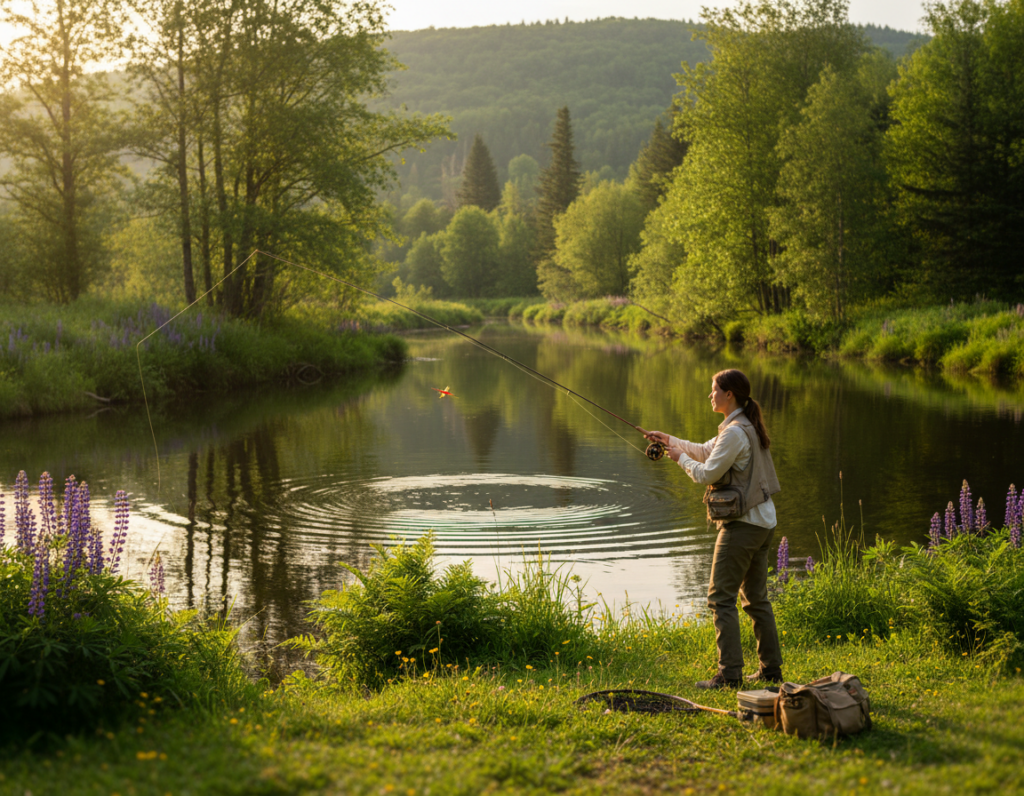
The roll cast shines where branches and banks block a full backcast. It is a staple of fly fishing for tight streams, small rivers, and water choked with vegetation.
Start with a short loop of line trailing in the water behind you. Lift the rod tip high and then roll it forward in one smooth motion. The submerged loop gives the line the tension it needs to unroll toward the target.
Why it works: the roll cast needs no backcast, so you can fish under overhangs and near steep banks. Fly casting experts use it to reposition line quickly in moving water and to reach fish in tight spaces.
- The rod tip must lift high before the forward roll to charge the loop.
- Keep the motion continuous so the line unrolls cleanly over the water.
- Practice short, controlled casts to build distance and present the fly softly to wary fish.
“Mastering the roll cast opens water that would otherwise be off limits to most anglers.”
Advanced Pitching and Flipping for Heavy Cover
Pitching and flipping are the go-to moves when fish sit tight among brush or thick weeds. These short-range deliveries let an angler place a bait into a small opening with minimal splash.
Quiet lure presentation matters most. For pitching, let the line hang about a foot below the rod tip. Use an underhand motion and a soft release so the lure drops gently toward the target.
Quiet Lure Presentation
Flipping removes the reel from the equation. Hold the line with your non-dominant hand and use the rod to flip the lure into tight cover. This gives precise control over distance and placement.
Keep the thumb ready to feather the spool during a pitch so the lure doesn’t overrun the opening.
Controlling the Fall
Controlling the fall keeps the bait in the strike zone. Use heavier weight to penetrate thick cover, but balance weight with rod action so the bait doesn’t slam down or bounce off structure.
- Rod and reel balance: Match weight to the rod for a soft, controlled fall.
- Line tension: Maintain light tension to feel thumps and set hooks quickly.
- Presentation: Aim for a quiet drop toward target and hold position to tempt wary fish.
“Master these short deliveries and you can reach fish that swim unseen in the nastiest water.”
Essential Body Positioning and Stance
Where your feet and hips sit often has more impact on a cast than how hard you swing the rod.
Use a balanced stance with your feet shoulder-width apart to steady your weight. This base helps when you fish from a dock, boat, or uneven bank.
Keep a relaxed grip on the rod to prevent fatigue and let your wrists move freely. A soft hold also improves feel at the tip and helps the line track true toward the target.
Position your lead foot toward the target to align hips and torso. That alignment uses body rotation to add power for longer distance without extra arm strain.
- A stable stance is the foundation of an accurate cast and smooth rod movement.
- When fly fishing, keep your stance flexible so you can adjust the plane as you follow the fly.
- Consistent body position builds muscle memory and steadier results in varied water and wind.
“Good posture lets the whole body do the work—feet, hips, and shoulders in sync.”
Managing Line Speed and Rod Tip Control
A tight loop begins with how you move the rod tip and control line speed. This is the core of precise fly presentation and short-range placement on the water.
Joan Wulff’s “Accuracy Triangle” helps you see how your hand/target line and eye/target line meet at the same point. Use that visual to align body, rod, and target before you start the forward stroke.
The Accuracy Triangle Concept
Drive the rod tip in a straight line toward the target so the loop follows that path. Small micro-adjustments to the rod and wrist change the loop that unrolls toward fish.
- Manage line speed to control loop shape and distance.
- Keep steady tension so the line does not collapse mid-flight.
- Finish with a clean release at the end of the forward stroke for a soft landing.
Practice deliberately: focus on tip movement, a soft release, and matching eye, hand, and target lines. For drills that refine these skills, check a practical guide to cast like a pro.
“Control of the rod tip is often the difference between a delicate presentation and a noisy splash that spooks fish.”
Adapting Your Strategy to Changing Wind Conditions
Reading the breeze is as important as reading the water when you want consistent results. Wind changes force you to change how you cast and where you aim.
When the wind is at your back you can gain extra distance, but don’t overcast the spot. Use a longer stroke on the rod and watch line tension. A tailwind helps reach farther targets without extra effort.
Facing a headwind? Lower the rod tip and use a compact motion to keep the line tight. Shorter, controlled casts keep your lure from drifting and improve presentation under tough conditions.
- Adaptability: Good fishing demands switching grips and delivery when wind shifts.
- Low trajectory: Use sidearm or a roll cast to keep the cast low and reduce blowback.
- Line control: Tighten the line and shorten your follow-through to fight crosswinds.
- Near cover: Favor shorter casts to place bait precisely when wind makes targeting hard.
Before you start, check prevailing wind direction and forecast. Read the day and adjust your approach so you can still catch fish despite changing conditions.
“Adaptation to wind separates experienced anglers from the rest.”
Developing Consistent Practice Habits
Consistent repetition with clear targets trains your eye, hand, and rod tip to move in sync. Short practice sessions build muscle memory and make it easier to hit chosen spots on the water.
Setting Up Target Markers
Place paper plates, tennis balls, or floating targets at several distances. Work from close to far, and note how your rod and line react at each range.
Using Natural Reference Points
Pick a leaf in a hedge or a small rock on the bank like Joan Wulff’s “pick a leaf” drill. This trains focus on a tiny target, which improves presentation when you fish near cover.
Evaluating Your Follow Through
After every attempt, watch the rod tip and where the leader lands. Use brightly colored yarn on the leader to track placement and make small changes to your follow-through and stance.
- Include forehand and backhand drills for real fishing situations.
- Practice with different rods and a reel to learn gear response in varied conditions.
- Keep sessions short, focused, and frequent to steadily improve distance and presentation.
“Small, regular practice beats rare marathon sessions when you want real progress on the water.”
Conclusion
Every angler grows from steady practice and small adjustments that improve presentation and confidence. Mastering the art of casting is a long road that rewards patience, focused drills, and a clear feel for your gear.
Adapt to wind, water, and cover to become more versatile. Prioritize accuracy over raw distance when fishing tight spots. Use target markers, watch your follow-through, and keep sessions short and regular.
Ultimately, the goal is intuitive performance so you can enjoy the hunt and the moment of the catch. Keep practicing, stay curious, and let small gains add up to big success on the water.