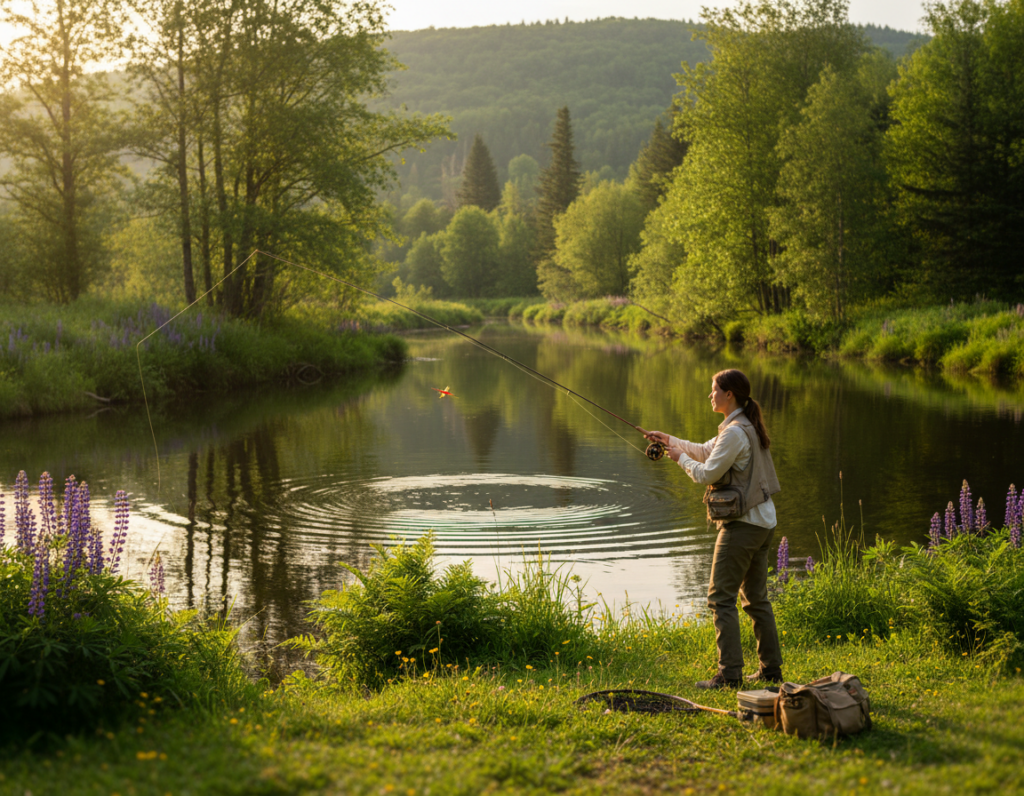
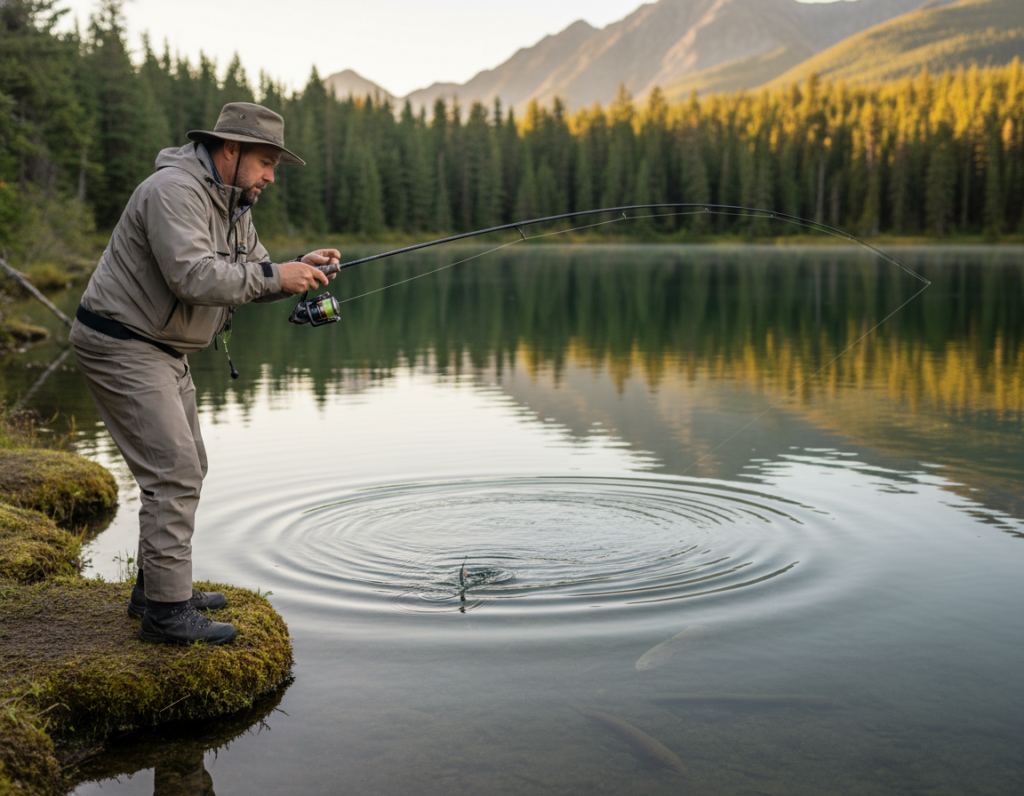
Clear water demands care. On places like the South Platte, picky trout during a blue winged olives hatch will ignore sloppy casts. Anglers learned that a soft cast and steady line make the difference between a hookup and a missed chance.
Pay attention to your rod tip. A 9-foot rod helps keep line off the water and reduces drag. Keep the fly low and let dry flies land with almost no splash.
Work on your angle and hand speed so leaders do not spook fish on the surface. Control drag and focus on the target. Small adjustments in cast timing and line control improve presentations in calm water.
For more on clear-water tactics and gear choices, see this guide on clear water bass strategies to apply similar subtlety and realism when sight fishing.
Understanding the Challenges of Calm and Clear Water
When water goes glassy, trout see details that usually go unnoticed. Clear water magnifies small errors. Approaching the stream with care is the first skill every serious angler must master.
Use a nine-foot rod to keep more line off the water. That extra reach helps the fly drift naturally and cuts visible line that can spook fish. Keep your rod tip high to reduce on-water slack.
Spend time watching currents and seams before you cast. Quiet observation helps you pick the right target and the best angle for a stealthy approach.
- Feet placement matters: move slowly and choose a low-profile route.
- Make casts silent and accurate; even a small splash alarms wary trout.
- Adjust leader and line management to match changing current and surface clues.
Mastering these small ways of working the stream is what turns good days into great ones. The details—rod length, tip control, and timing—are the things that fool selective trout in clear conditions.
Essential Gear for Delicate Fishing Presentation Techniques
Choose gear that keeps your fly landing like a whisper on glassy water. The right setup reduces splash, gives you more time on the drift, and keeps wary trout from reacting.
Matching Rod Action to Conditions
Pick a rod that fits the day. A 3-5WT rod offers the sensitivity needed for finesse and dry fly work. It lets you feel a take through your hand and control the rod tip during the cast.
When wind or heavier rigs demand power, move to a 6-7WT. A medium-action blank is a good compromise for steady, soft casts that keep the line off the surface.
Selecting the Right Leader Length
Leader length shapes the drift. Longer leaders let flies land softer and trail naturally on calm water. Match leader size to fly weight and current speed so the fly rides the surface without drag.
“Small gear choices make big differences—rod, fly line, and leader work together to sell the illusion.”
- Use a properly weighted fly line to turn over long leaders.
- Keep your rod tip high to reduce on-water line contact.
- Choose fly size that suits the hatch and the trout feeding the surface.
Mastering Rod Tip Path and Casting Accuracy
Precision begins with a simple visual cue. Imagine a clockface and drive the rod tip in a straight line from 10 o’clock to 2 o’clock for cleaner casts. This path forms tight loops and keeps your fly line focused on the target.
Visualizing the Clock Face for Tight Loops
Keep the rod tip steady. A straight tip path between 10 and 2 is the most reliable way to land the fly exactly where the fish is feeding on the water.
Maintain a firm wrist so the loop size stays small. Small loops cut wind and reduce splash, letting the fly settle naturally.
- Picture the 10-to-2 motion before each cast to train muscle memory.
- Use a sidearm cast when you must keep the fly line low to avoid spooking a wary fish.
- Focus on the target and repeat consistent tip paths across all practice casts.
- The rod tip path controls loop size and determines how the fly lands on the surface.
Every cast should have intent. When your tip travels straight and steady, the fly reaches the exact spot and the whole presentation gains accuracy.
Strategic Angles for Natural Drifts
Positioning your body and line early gives the fly time to settle and reduces visible drag.
Casting upstream for stealth keeps the fly on a natural path. Stand slightly upstream and make a soft cast so the fly rides with the current. This reduces drag and lets trout take the offering without alarm.
Casting Upstream for Stealth
Use a gentle upstream cast to keep the line off the surface longer. A low rod tip and slow hand speed help the dry flies land softly.
Utilizing Quartering Angles
A quartering cast gives you better control of the drift. Aim slightly across and upstream to present the fly ahead of the target fish. This angle often wins the split-second decision during a hatch.
The Benefits of the Reach Cast
The Orvis reach cast lets you mend in the air and drop a drag-free fly into the seam. Keep the rod tip extended toward the mend to shape the line and free the fly from unwanted drag.
- Practice the reach cast to manage line with the current.
- Adjust your angle at each new spot so the fly is the first thing the fish sees.
- Extend the rod tip to keep control of the fly on the surface.
Managing Line and Drag After the Cast
Once the fly lands, subtle control of line and tip turns a good cast into a fish-catching drift.
Jason Shemchuk stresses one key rule: the instant the fly hits the water you manage slack and tension. Keep your rod tip high and lead the fly with the rod to minimize drag and keep the drift natural.
“The moment your fly hits the water, your job is to manage the slack and tension in your line.”
With dry flies, mend immediately when the current or angle will pull the line. A quick upstream or downstream mend reshapes the fly line and keeps the fly riding true on the surface.
- Keep the rod tip up and slightly ahead of the fly.
- Watch for subtle speed changes in the current and respond with short mends.
- Stay focused on the drift until the fly passes the target — even one sloppy inch can ruin the chance.
Good line management separates success from failure. Practice leading the fly with your rod and you will see more trout take natural-looking offerings in calm water.
Conclusion
strong, refining the way you set the rod tip and manage line will pay off on clear water.
Patience and steady practice matter. Mastering these methods takes time, but it is the most reliable path to catch more fish when trout are selective.
Focus on soft casts, a clean tip path, and prompt mends so the fly drifts naturally. Watch your feet and keep movement minimal to avoid spooking fish.
Practice consistently with the right gear and stay alert to drag. Small changes in cast timing or rod angle often turn a quiet day into a productive one.