Anglers who track shifts in the sky and on the water can make smarter choices and stay safer on any trip. This introduction outlines simple steps to read changing conditions and to time outings for better success.
Understanding how conditions affect fish activity helps an angler plan the best time to cast. By watching pressure changes, cloud cover, and water movement, one can predict when fish become active and adapt tactics.
Safety is the priority: sudden shifts in water can turn a productive day into a hazardous one. Proper preparation, appropriate gear, and a clear plan protect everyone on the water.
This guide will share practical tips to read the environment, adjust strategy, and enjoy more productive, secure outings. Small habits make a big difference over a full day on freshwater.
Understanding Weather Patterns and Fish Behavior
Reading large-scale atmospheric shifts helps anglers guess where fish will move during a trip. This section explains how pressure, cloud cover, and temperature changes influence fish behavior and where to look for bites.
Impact of Atmospheric Changes
Fish are cold-blooded, so water temperature controls their metabolism. Walleye prefer 35°F–45°F, while bass become more active between 50°F and 70°F.
Barometric pressure and cloud cover can alter oxygen levels and light penetration. These shifts often change activity levels and feeding times.
Predicting Fish Movement
Anglers can use simple cues to predict where fish will go:
- Seek areas with cover—weed beds, logs, and drop-offs—where fish feel safe.
- Follow temperature gradients; fish move to comfortable levels of oxygen and heat.
- Note pressure trends; a steady rise or fall often changes bite times.
Understanding these patterns improves chances of catching fish during different times of the day and across varied conditions.
How Barometric Pressure Affects Fish Activity
Barometric shifts often set the rhythm for when fish move, feed, or hide during a day on the water. Anglers who track these changes gain an edge by knowing when fish become more active.
When barometric pressure drops, it often signals an approaching storm and a short window of heightened fish activity. Fish may feed aggressively as conditions shift.
High pressure usually makes fish sluggish. They often move to deeper levels where pressure is steadier. Bass and other species change their behavior based on these patterns.
- Falling pressure and overcast skies can create prime conditions for bites.
- Stable, high pressure tends to push fish to deeper cover and slower activity.
- Monitoring barometric pressure helps anglers time their tactics and select the right water depth.
“A sudden pressure drop often produces a brief feeding surge before a storm.”
Understanding barometric pressure gives anglers clearer expectations for day-to-day changes and better success on the water.
The Role of Water Temperature in Fishing Success
How warm or cold the water feels shapes fish movement and feeding windows more than many anglers expect. Water temperature sets metabolism, so it directly changes where fish go and how they feed.
Seasonal Temperature Variations
Seasonal shifts in weather conditions alter lake heat and force species into new areas. In spring and fall, fish move to transitional zones where temperature and oxygen suit them best.
Walleye prefer colder ranges between 35°F and 45°F. Bass stay most active from 50°F to 70°F. These bands help predict depth and cover choices.
- Check water temperature with a thermometer, especially near structure and deep holes.
- Adjust gear to match current temperature-driven behavior and target the right cover.
- Watch seasonal patterns; cooler surface water often pushes fish toward deeper areas.
“Monitoring temperature gives anglers a clearer idea of where and when fish will feed.”
Mastering Weather Awareness Fishing Techniques
Small changes in light and pressure can reshape where and how fish bite. This section shows practical steps to match gear, lure choice, and timing to changing conditions.
Adapting Lures to Light
When barometric pressure drops before a storm, anglers should switch to larger, brighter lures. Brighter lures trigger strikes from active fish during low-light windows.
On cloudy days, bass and other predators move into shallow areas. Use natural-color lures that mimic prey to boost catching fish chances.
Adjusting Fishing Depth
High pressure pushes fish to deeper, stable water. Adjust lines and weights to reach those levels.
In contrast, pressure drops often pull fish into mid-depths and flats. Change depth until consistent fish activity appears.
Timing Your Outings
Plan trips for dawn or dusk to increase chances of bites. Low-light times make fish become active across more areas.
- Match lures to light: bright for low light, natural for soft light.
- Shift depth with pressure and temperature changes.
- Target shallow cover on overcast days for bass activity.
“Proper gear and timing let anglers manage weather patterns and enjoy more productive days on the water.”
Recognizing Rough Water Hazards
Choppy water and sudden gusts turn routine outings into dangerous situations in minutes. High waves and whitecaps drastically raise the risk for any boat or shore angler during a quick storm.
Lightning is among the deadliest threats; anglers should leave the water immediately if they see flashes or hear thunder. Heavy rain and strong wind also cut visibility, hiding rocks and submerged structures that can damage a boat or gear.
As conditions deteriorate, the surface grows unpredictable. Choppy transitions and confused waves challenge experienced crews and increase capsizing risk.
- Prioritize exit: move to shore or sheltered harbor at first signs of electrical activity.
- Secure gear: tie down rods and electronics to avoid losses during rough spells.
- Navigate slowly: reduce speed in heavy rain and watch for changing currents around shallow areas.
Bass and other fish often seek cover during rough times, but safety must come before the urge to keep casting. For practical tips on handling storms and staying safe on the water, read this guide on how to fish safely in stormy or rough.
“When seas turn choppy, getting off the water quickly is the best strategy.”
Essential Safety Gear and Emergency Preparedness
Packing the right kit and testing communications before launch reduces risk and improves response times.
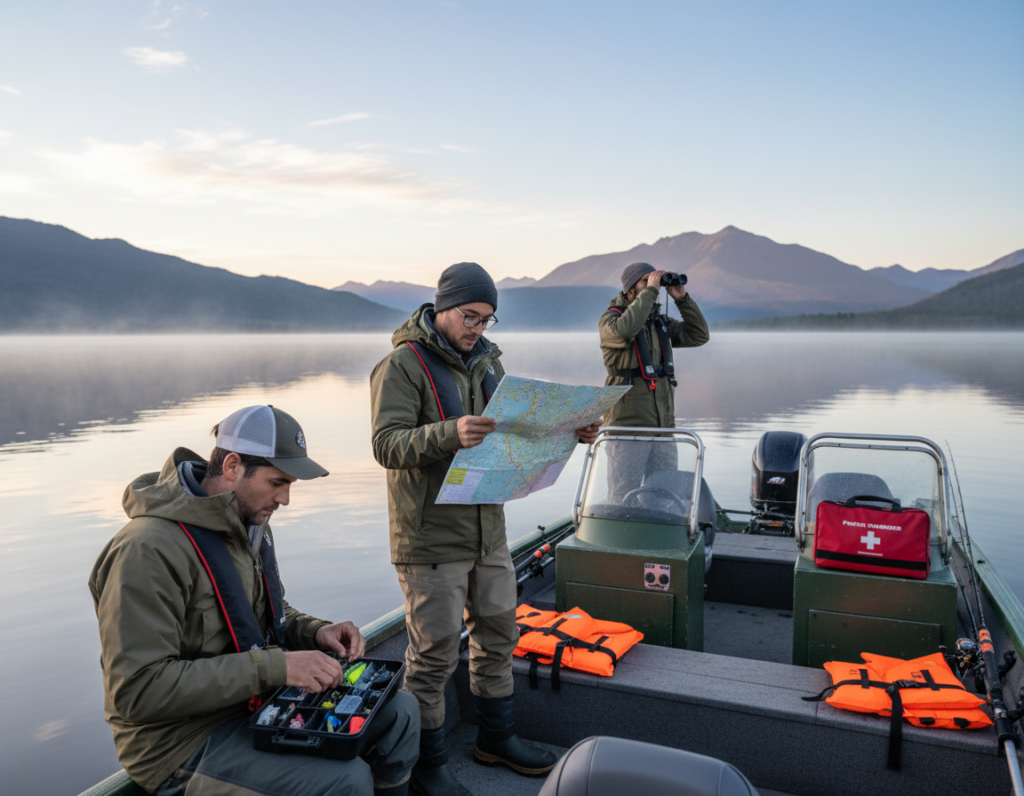
Every angler should carry life jackets sized for everyone aboard and at least one reliable radio or cell device. Keep a charged backup battery and a waterproof case for electronics.
Check barometric pressure and local forecasts before the trip. Monitor changes in pressure and temperature while on the water to adapt plans early.
Test lights, radios, and flares before every outing. Confirm that bilge pumps work and that the boat has a clear plan for returning to shore if wind or waves increase.
- Onboard kit: life jackets, VHF radio, signaling lights, first-aid, and tow line.
- Pre-launch checks: batteries, anchors, and emergency contacts posted on the boat.
- Storm plan: identify nearest shelter and practice a quick exit routine.
“Prepared gear and practiced actions are the best defense when conditions shift fast.”
Creating a Reliable Float Plan
A clear float plan turns a routine outing into a recoverable trip when conditions shift unexpectedly. Writing a short plan before launch gives rescuers critical data and reduces search time if a boat needs help.
Key Details for Rescuers
Location: name the water body, GPS coordinates, and likely access points. Rescuers narrow their search faster with precise sites.
Timing: list launch and expected return times. Include alternate times if the trip may run late during low light or peak bass activity.
Boat and gear: describe the boat, color, motor size, life jackets, and special gear. This helps responders spot the craft quickly.
- Share emergency contacts and trip notes with a trusted person ashore.
- Note likely routes and any planned stops near cover or structure.
- Include known medical needs and onboard safety equipment.
Anglers who file a float plan cut the risk of long searches during an unexpected storm or sudden wind shifts. For a ready template and tips, read what is a float plan.
“A simple written plan can be the difference between a fast rescue and a long wait.”
Post-Storm Fishing Safety Considerations
Post-storm returns demand a slow, methodical assessment of vessel, tackle, and surface activity.
Inspect the boat and gear. Check hull, motor, and fittings for damage from heavy rain, wind, or floating debris. Scan lines, reels, and rods for frays or cracks that storms can cause.
Wait until water and currents calm before resuming the trip. Even after the skies clear, unstable waves and strong currents raise the risk of hidden hazards below the surface.
Observe fish activity from a distance. Changes in temperature or barometric pressure can make fish move to new cover or different levels. Watch for surface signs before casting.
- Check lines and rod integrity before each cast.
- Confirm bilge, pumps, and navigation lights work after heavy rain.
- Scan for new debris fields or submerged hazards that storms may have created.
“A careful post-storm check keeps anglers safe and preserves gear for the next productive day on the water.”
Conclusion
Act smart, observation and quick adjustments make the difference between a safe day and a wasted trip on the water.
Successful fishing depends on reading shifting conditions and tailoring techniques as the day changes. By knowing how atmospheric shifts influence fish, an angler can make better choices and improve catch rates.
Always prioritize safety: carry the right gear, file a float plan, and be prepared to leave the water when storms approach. Guidesly offers practical guides and expert tips to help anglers make confident, safe decisions on every trip.
Consistent observation of conditions and steady practice will make any angler more skilled and prepared for whatever the day brings.