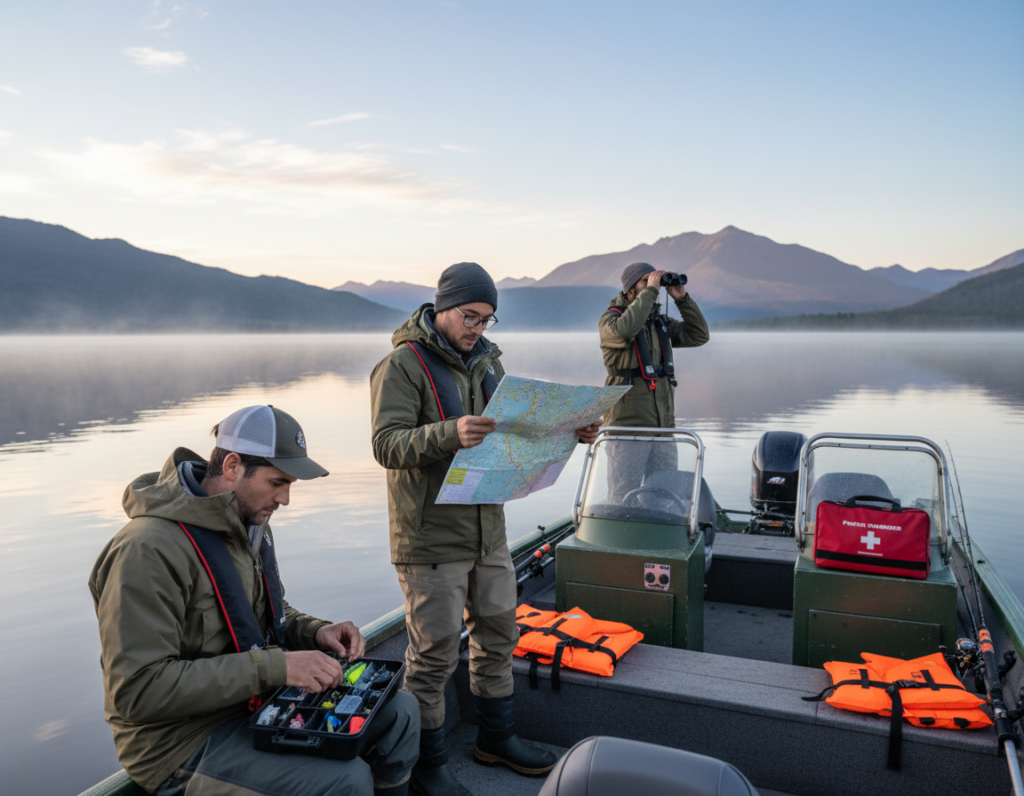
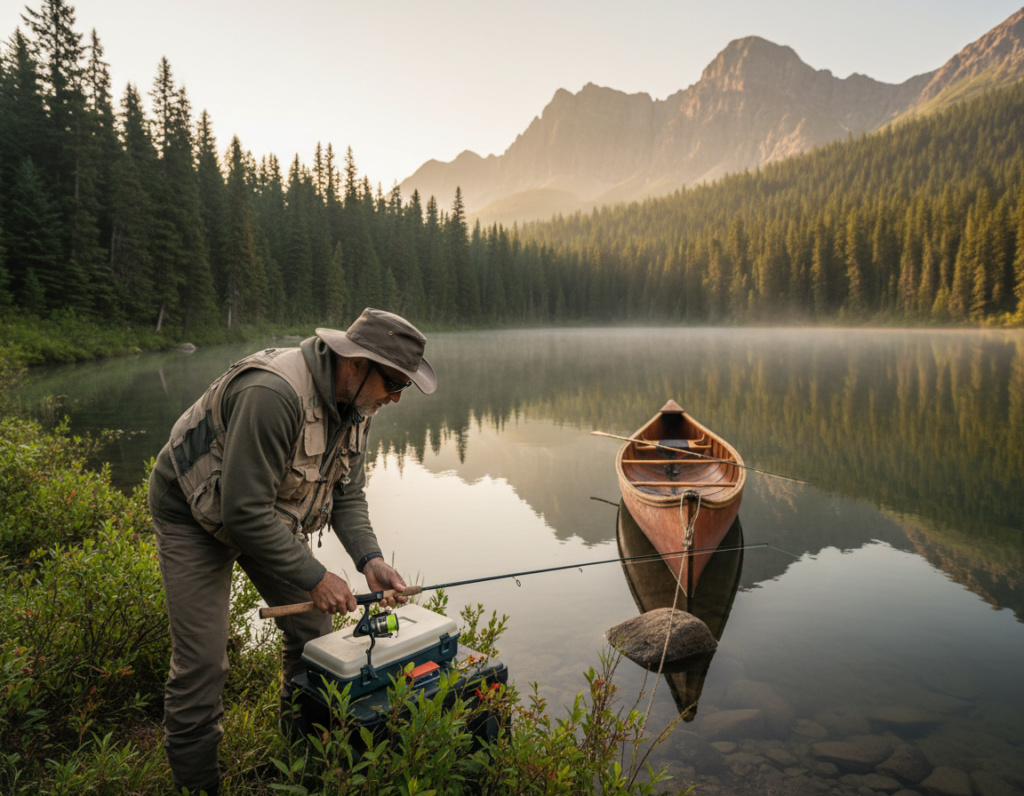
Solo trips offer a great way to connect with nature and unwind. The U.S. Fish & Wildlife Service and the American Sportfishing Association promote responsible outings during National Fishing and Boating Week. That support highlights how planning improves safety and enjoyment.
Before heading out, it is wise to research quiet water areas and local rules. He or she should set aside time to learn limits, seasons, and access points. This step helps protect fish populations and keeps interactions lawful.
Anglers who follow clear guidelines find trips more rewarding. With basic checks and respect for the water, a solo outing becomes a reliable way to relax and grow skills. Good planning makes the experience positive for every angler.
Essential Safe Fishing Preparation for Solo Anglers
A short checklist before any solo outing helps anglers meet regulations and enjoy the day. Simple tasks cut risk and let one focus on the experience.
Licensing and Regulations
He or she must verify state laws and carry a valid license. Rules set species limits, minimum sizes, and daily quotas. Check the park website for area-specific regulations before departure.
Planning Your Trip
Plan the route and check the weather forecast for the day. Designate a water watcher if a family member or companion will be nearby on a boat or shore.
- Confirm license and tag requirements for the area.
- Review park rules and consult rangers for local tips and help.
- Use published trip guides to organize gear and shelter options.
“Good planning prevents common problems and keeps anglers focused on the catch and the setting.”
For more detailed kayak-specific guidance, see the solo kayak safety essentials.
Selecting and Organizing Your Fishing Gear
Choosing the right rod and arranging tackle makes outings smoother and more productive.
Pick a rod that one person can hold comfortably in one hand, such as a closed spin-casting or an open-bail spinning model. Use a 4- to 12-pound-test monofilament line and attach a size 6–10 hook to match common fish in the area.
Thread the line through the hook eye and tie an Improved Clinch Knot to secure the hook firmly. Practice your cast in an open spot away from other people and the shore to avoid accidental hooking.
- Keep a bobber on the line to spot bites in the water quickly.
- Group hooks, sinkers, and lures in small labeled boxes for fast access.
- Stow the rod in a padded sleeve and test connections before leaving the area.
Proper organization is the best way to be ready to catch fish when an opportunity appears. Small routines save time and reduce mistakes on the water.
Prioritizing Personal Safety on the Water
Personal checks and clear habits reduce risk when he or she spends time alone near lakes or rivers. Small routines let an angler focus on the experience while staying alert to changing weather and conditions.
Life Jacket Requirements
Always wear a U.S. Coast Guard-approved life jacket when on a boat or wading in the water. A proper life jacket fits snugly and keeps a person afloat without restricting movement.
A life jacket is essential for every member of your family; inflatable water wings are not a substitute for a proper jacket.
Sun Protection Strategies
Protect against UV exposure. UV damage can start in as little as 15 minutes. Apply broad-spectrum sunscreen with SPF 15 or greater and reapply every two hours.
Wear a hat and long sleeves to reduce glare and heat. These simple steps help protect skin and let one enjoy the day without undue risk to health or fish handling ability.
Managing Hook Injuries
Learn basic first aid for small cuts and punctures from hooks. Clean the wound, control bleeding, and use antiseptic as needed.
If a hook deeply penetrates skin, muscle, or an eye, do not try to remove it. Seek immediate medical help and get professional aid rather than risking further injury.
- Never cast near other people; always look around before releasing the line.
- Keep a compact first aid kit aboard and know how to use it.
- Be ready to seek shelter or help if sudden weather develops in the areas you visit.
“Wearing a proper life jacket and staying sun-aware are the simplest ways to reduce risk on any solo outing.”
Navigating Environmental Hazards and Wildlife
Knowing how water and weather change through the day helps an angler avoid hidden risks. Quick checks at the start of a day give time to spot shifting conditions and tail the safest route to a chosen spot.
Understanding Water Conditions
Hypothermia can begin even in water near 80° F, so exit if someone feels numb, confused, or chilled. Tides reverse roughly every six hours in coastal areas; consult tide tables on the park website to avoid getting trapped.
- Watch for unseen dangers: swift currents, submerged trees, and sudden drop-offs in rivers or lakes.
- Check the forecast before a trip; heavy rain upstream can cause flash floods downstream despite clear skies locally.
- If in a boat and water level rises or one hears rushing water, seek higher ground immediately.
Remain alert for signs of aggressive wildlife near a fishing spot. Know local response steps and call for help when needed. Small habits—monitoring time, checking tides, and scanning the area—improve overall safety and protect both people and fish.
Best Practices for Catch and Release
An angler’s actions during the first minute after a catch determine survival rates for many species. Move calmly and plan each step so the fish spends minimal time out of the water.
Keep the fish wet. Whenever possible, cradle the fish in the water while removing the hook. This helps preserve the mucus layer that protects the animal.
- Minimize airtime: Work quickly and gently to release the catch back to the water.
- Use a rubber net to reduce scale loss and avoid abrasive contact.
- If a hook is swallowed, do not pull it free; cut the line close to the mouth to reduce injury.
These simple tips are the best way to protect local populations and improve outcomes for released fish. For official guidance, see catch and release best practices.
“Handle every catch with care; small actions now pay off in healthier waters and stronger future catches.”
Conclusion
Closing a day on quiet water depends on good choices about location, kit, and conduct. He or she should leave a plan with someone and check local rules before any outing.
For a successful fishing trip, pick gear that fits the chosen fishing spot and the exact spot within it. Small routines help anglers stay focused and respond quickly to change.
Respect wildlife and park rules so future visitors enjoy the same access. An individual angler who watches the weather, wears proper gear, and follows release practices protects parks and improves outcomes for all.
Plan well, act responsibly, and enjoy the calm—your next visit will thank you.