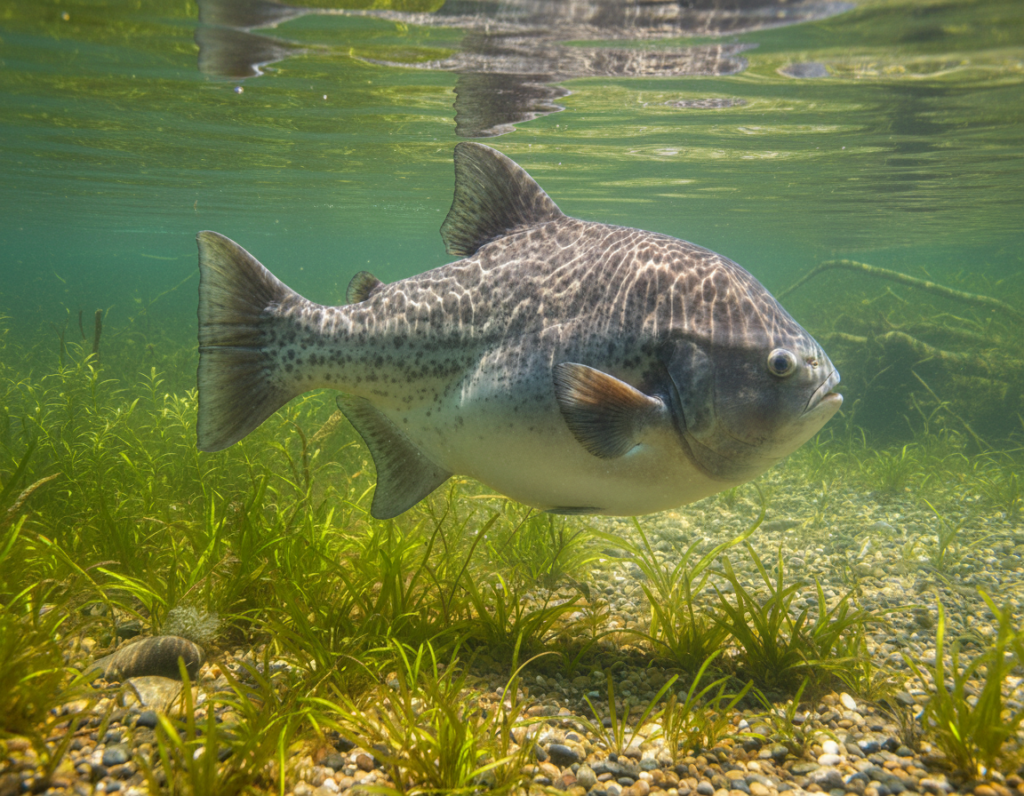
Understanding how large anglers’ targets hunt helps them read the water and pick the right lure. In North America, species like muskie, pike, trout, salmon, and catfish show distinct cues when they search for prey.
Anglers who study these cues can predict a predator’s response to different sizes and types of offerings. Sight, smell, and vibration all guide a hunter to its food, and timing can shift feeding ranges through the day.
Success on a river or lake often comes from matching natural prey and adding specialized attractors when needed. That reduces the risk of blank trips and raises the odds of a strike.
Mastering subtle signals — from a twitch of the line to changes in presence near cover — gives anglers an edge. This introduction frames the key behaviors that influence catch opportunities in freshwater settings.
Understanding Predatory Fish Behavior and Instincts
Understanding what triggers an aggressive strike helps anglers choose lures that match a hunter’s instincts.
Instincts and Triggers
The primary instinct for many predators is the need for food. That drive pushes them to hunt by day and night and to weigh the energy cost of each chase.
Some species, like pike, will wait for the perfect time to explode on a target. They assess size, movement, and risk before committing to an attack.
- Many predators act opportunistically and will take varied prey when it appears close.
- Each species has unique thresholds that must be met before it attacks a lure or bait.
Sensory Modes
Research shows these animals rely on sight, sound, and lateral-line cues to locate prey from distance.
Anglers who match lure action to the dominant sensory input of a species see higher response rates. Choosing a lure that mimics natural movement confirms the target as food.
- Visual—flash and silhouette.
- Auditory—vibration and pops.
- Mechanical—water pressure sensed by the lateral line.
For practical tips on attractors that provoke strikes, see this resource on fish attractor facts.
The Role of the Lateral Line Organ in Hunting
Along the length of a body, the lateral line acts like a living river of sensory signals. Researchers at the University of Florida compare neuromasts to spring heads that feed constant information to the brain.
The lateral line lets a predator sense pressure gradients and tiny changes in the surrounding water. This system runs the full length of the animal and links to nerves through neuromasts.
A pike uses this ability to detect prey movement near the surface, even in low light. By reading vibration and pressure, the animal can track targets with precision in darkness.
- Neuromasts convert movement into nerve signals in real time.
- Length of the lateral line varies by species but preserves core function.
- Anglers can trigger strikes by matching lure vibration to natural movement.
Understanding the lateral line is central to mastering how predators sense and react. This knowledge helps anglers choose lures that mimic the cues a hunter is hardwired to follow.
How Environmental Complexity Influences Predator Tactics
Dense underwater structure reshapes how hunters patrol and ambush in lakes and rivers.
Impact of Vegetation Density
Vegetation alters hunting style. A classic 1989 study by Savino and Stein showed that largemouth bass shift from active searching to ambush as plant density rises.
Time spent watching prey rises in complex cover because stems give smaller fish refuge. Bluegills change their behaviour and move into thicker growth when a predator nears.
Northern pike use their tubular shape to slip through mats and wait motionless near the surface. This lets them explode into a fast ambush with high success.
- Stem density mediates the ability to capture prey by providing hiding spots.
- Cover type affects where predators position and how they strike.
- Vegetation can force a more aggressive response to a lure.
“Anglers who read cover can target the exact zone where a predator is most likely to lie in wait.”
Analyzing Prey Selection and Vulnerability
Prey choice often comes down to which targets a hunter can capture and swallow with the least effort.
Studies using bluegills and fathead minnows show clear trends in selection. A pike will often pick fathead minnows over bluegills because minnows use structure less effectively for cover. Time spent pursuing a given prey type reflects how vulnerable that target appears.
Size and body shape matter. Long, slender targets that cannot hide are taken more often than deep-bodied individuals that slip into plants. Shoaling species may gain safety in numbers, but tight schools can also draw attention and increase feeding success for a hunter.
- Predators favor vulnerable individuals — injured, erratic, or slow-moving.
- Feeding success depends on identifying and isolating those targets.
- Anglers can raise catch rates by matching lure size and movement to local prey.
“Understanding which local prey are most vulnerable explains why a lure is ignored or attacked.”
By analyzing local prey species and types, anglers learn why a larger trophy may ignore a lure in favor of easy food. This relationship between hunter and target is the basis for smarter tactics on lakes and rivers.
Utilizing Lateral Reactive Technology for Better Catches
Vibration wave tools now let anglers mimic the subtle cues that signal nearby prey.
T-H Marine’s HydroWave uses tuned vibration frequency to imitate struggling prey. The unit projects specific pulses that target the lateral line and create a convincing presence of prey near the boat.
The device can change a hunter’s response to a lure. By matching frequency and pulse patterns, HydroWave models encourage more aggressive strikes and make artificial lures feel like real prey in the water.
Pro anglers such as Mark Daniels and Kevin VanDam show how to integrate this tool. They use different settings to find the right pattern for local prey and target species.
- Direct lateral-line stimulation. Triggers hunting instincts in nearby predators.
- Multiple models available. Options match species and conditions.
- More productive time on the water. Anglers convert science into consistent response rates.
“When tuned correctly, the unit makes the lure appear alive and irresistible,” said experienced tournament anglers.
Selecting the Right Attractors for Different Species
Successful anglers select attractors that speak the local language of sight, sound, or scent. The right lure convinces a nearby hunter that prey is close and easy to capture.
Visual Stimuli
Color, silhouette, and erratic motion matter most for species that hunt by sight. A pike or other ambush hunter often reacts to a lure that mimics a wounded prey in a river.
Match the size and body shape of the attractor to local prey. Bucktooth tetras reach about 15 cm and will hit compact, lively profiles.
Auditory Cues
Vibration and clicks target the lateral line and can draw hunting animals from range. Frequency matters; some models tune pulses that nearby predators cannot ignore.
Use noisy lures when visibility is low or when feeding time is brief. A hujeta gar grows to 25 cm and needs attractors that are easy to track during rapid strikes.
Scent and Texture
Scent invites a tracking response, while texture sells the idea that the lure is edible. Combining scent with rough or soft finishes can trigger feeding decisions.
- Match sense to species. Visual lures for sight hunters; vibration for lateral-line specialists.
- Vary types and models. A variety helps adapt to changing conditions and reduces risk of being ignored.
- Size matters. Choose lure size that fits the common prey in local freshwater systems.
“Selecting attractors that appeal to a predator’s primary senses raises the chance of a strike.”
Adapting Fishing Techniques to Predator Movement
Tracking daily patrol routes helps anglers place presentations where strikes are most likely.
Anglers must watch how predators patrol territory in search of food. Observing prey movement gives clear clues about where a hunter will wait.
A pike often shifts between deep water and shallow cover during the day. These changes force an angler to move and vary lure depth and retrieve speed.
Different species show unique feeding patterns that dictate lure type and action. Match lure size and pace to the activity level of the target.
- Read cover and follow prey paths.
- Vary retrieve speed to match local feeding rhythms.
- Stay mobile; test adjacent zones until active predators are found.
Successful anglers adapt quickly. They note subtle environmental changes—temperature, light, and other fish—and adjust tactics to align with current movements and moods.
“Mastering movement-based tactics separates the casual angler from the consistent pro.”
Avoiding Common Mistakes in Predator Fishing
Simple choices—like bait selection and handling—shape whether a trip helps or harms local stocks.
One frequent error is using feeder fish such as goldfish or rosy-red minnows. These cyprinids often carry parasites, high fat and thiaminase, which harm predators and reduce long-term prey health.
Anglers should avoid that risk and favor high-quality, non-living options. Prepared baits and formulated diets supply better nutrition without spreading disease.
- Health first: skip goldfish to prevent nutrient deficiencies and contagion.
- Know the species: learn natural behaviors and feeding range before choosing bait.
- Use variety: alternate food types to support growth and reduce rejection.
Patience and observation pay off. Many mistakes stem from rushed tactics or poor handling that make predators wary.
“Learning from errors is vital to becoming a more effective and ethical angler.”
Conclusion
Small shifts in water, light, or prey movement often signal where a hunter will strike next. Careful observation lets an angler match lure action to local cues and increase chances of a catch. Simple adjustments pay off fast.
Mastering senses means studying sight, scent, and vibration and noting a predator’s immediate response. Understanding prey availability and local behaviour helps anglers choose the right attractor and adapt retrieves to routine movement.
Consistent success comes from observing, learning, and applying science to every cast. With attention and proper tools, anglers gain an edge and enjoy more productive time on the water.