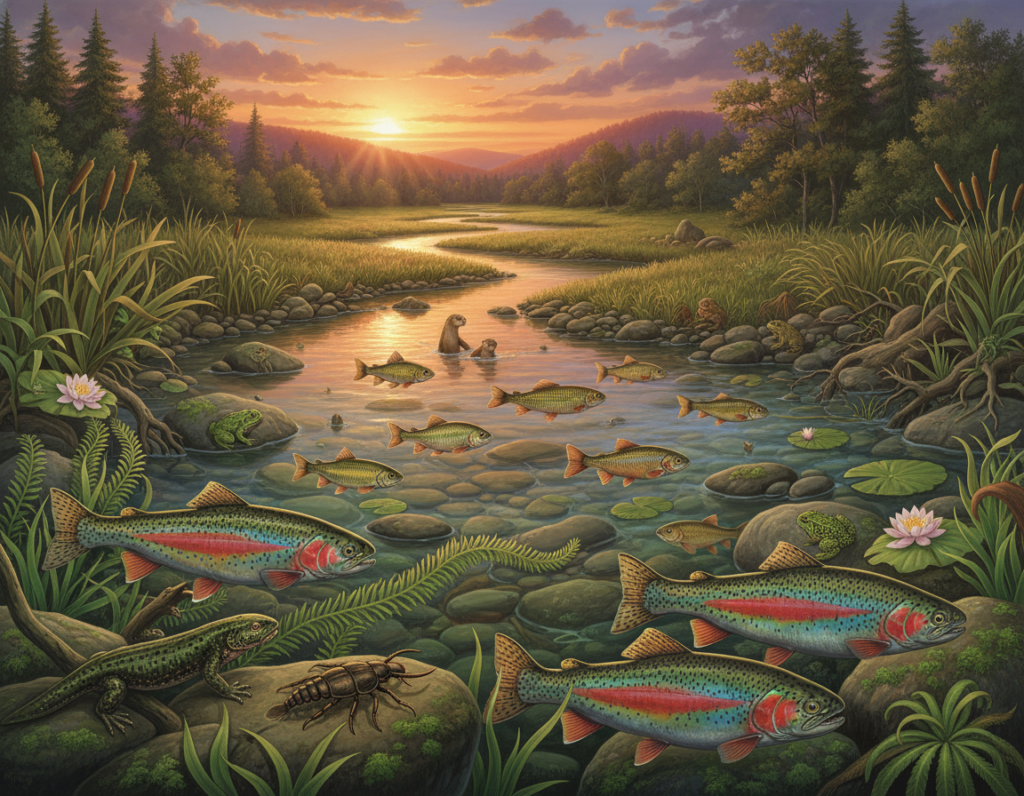
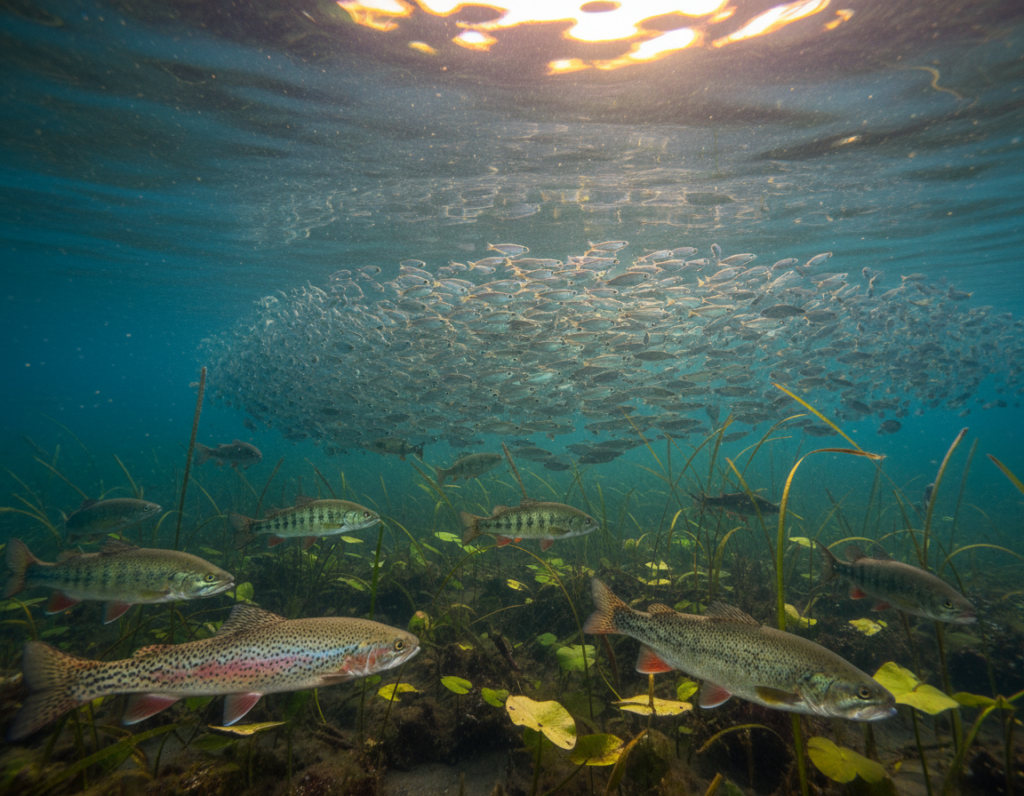
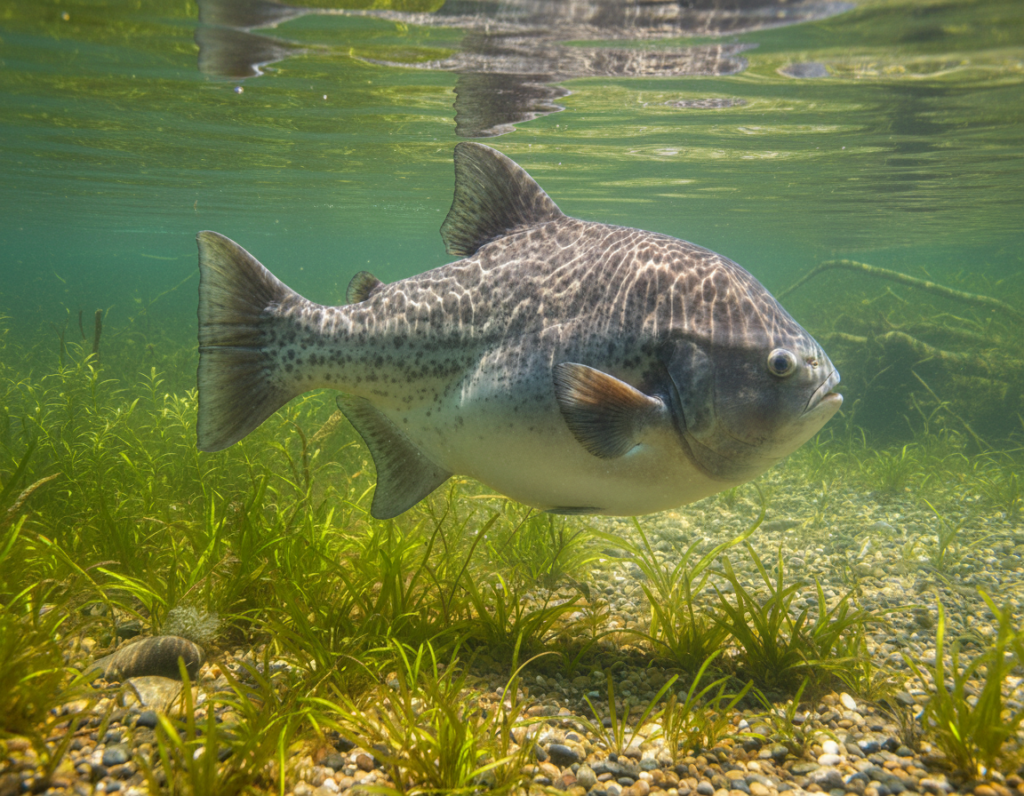
The yellow perch is a familiar freshwater species across the Midwest and Northeast United States and much of Canada. It shares close ties with the European perch and is sometimes treated as a subspecies. These fish remain active through changing season, which keeps them a reliable target for North American anglers.
In lakes and ponds, yellow perch form a vital link in the food web. They feed and respond to shifting water temperatures, and they serve as prey for walleye, northern pike, and lake trout. Anglers value this activity because it creates predictable patterns for fishing across spring, summer, fall, and winter.
Understanding where and when the yellow perch gathers helps anglers make better decisions on tackle and technique. Small changes in depth and water clarity can alter feeding zones quickly. This introduction sets the stage for a closer look at how seasonal shifts shape distribution and feeding in lake systems.
Understanding Perch Movement Behavior in Lakes
Yellow perch shift depth and habitat with the seasons, leaving deep overwintering flats for shallow spawning zones each spring. These fish favor vegetated shorelines and modest structures where cover and food concentrate.
They form tight schools in weed beds, which offers protection and efficient feeding. Because they are relatively slow swimmers, they rarely bolt or chase long distances. That limited speed helps explain why these fish do not roam far in a given year.
State research in Wisconsin supports this pattern: most individuals stay within a small home range. Anglers can use this predictability to focus on shallow, weed-filled bays during spawning and nearby drop-offs afterward.
Key takeaways:
- Seasonal depth shifts—deep to shallow—drive location changes.
- Dense schooling in vegetation is common.
- Limited travel and modest swimming ability keep populations localized.
Identifying Yellow Perch Characteristics
The adult yellow perch stands out in freshwater habitats thanks to its golden body and striking vertical stripes. This brief guide covers key appearance traits and typical life span so anglers and naturalists can identify and understand these fish at a glance.
Physical Appearance
Adult yellow perch are usually golden yellow with six to eight dark vertical bars along the body. Their fins often carry a slight orange tint near the edges. These markings help distinguish them from similar species, including the european perch.
Lifespan and Growth
Yellow perch typically live nine to ten years, though average age varies with predator pressure and fishing. Females grow faster and reach a larger ultimate size than males; at seven years, females may be about 2.5 cm longer.
- Golden color with 6–8 bars on the sides
- Life span usually 9–10 years, variable by lake
- Females often larger — notable for size and growth
- World record: 4 lb 3 oz, caught in New Jersey, 1865
The Role of Water Temperature in Fish Activity
Temperature zones in a lake mark the difference between an active bite and a slow day for yellow perch.
Ideal angling range: most catches occur when lake water sits between 63°F and 77°F.
Growth also links tightly to warmth. Fish show faster growth when temperature stays in a 70–75°F range.
Above about 78°F, however, stress rises quickly. The bite drops and survival after release becomes less likely.
In summer these fish seek moderate water. They avoid cold, deep layers and the very warm surface bands.
- Ideal catch range: 63–77°F
- Optimal growth: 70–75°F
- Stress threshold: >78°F — lower bite and higher post-release mortality
Anglers who watch thermoclines and surface readings gain an edge. Targeting mid-thermocline zones improves hook-up rates while helping protect habitat and fish health.
Seasonal Transitions and Spawning Cycles
When water warms each spring, adult yellow perch gather in shallow areas to begin the spawning cycle. This transition sets the stage for reproduction across many lakes and sheltered bays.
Spawning requirements
Spawning takes place in the spring when water temperature ranges from 35°F to 65°F. Females release long, gelatinous strands that can hold between 10,000 and 40,000 eggs.
Timing and sites
Most spawning occurs at night or in the early morning. Females may spawn as many as eight times in a season.
Egg strands are commonly draped over vegetation, fallen debris, or other structure in shallow areas with little or no current. Two to five males often accompany a single female during courtship and spawning.
- Temperature window: 35–65°F
- Eggs per strand: 10,000–40,000
- Timing: night or early morning; multiple spawnings possible
- Sites: shallow, sheltered habitat with vegetation or debris
Spring Migration to Shallow Waters
As spring warms shallow bays, yellow perch leave winter depths and concentrate near new plant growth.
These fish move from deep overwintering zones into shallow spawning areas. They often target bulrush beds and emerging vegetation in about 3 to 5 feet of water.
Male fish usually arrive on the spawning grounds first, with females following. Depths vary widely—observations range from 0.5 to 8 meters depending on the lake and clarity.
In clear-water lakes, spawning may occur at 10 feet or deeper when vegetation supports egg strands. After spawning, many individuals linger near young plants such as coontail that reach 3–4 inches tall.
“Shallow, vegetated flats are the most reliable spring targets for anglers looking to find concentrated schools.”
Practical tip: study shoreline growth and seasonal fishing patterns to predict likely spring areas and improve success.
- Deep-to-shallow shift starts with warming water.
- Bulrush and new weed beds in 3–5 ft are prime.
- Timing: males first, females follow across 0.5–8 m depths.
Summer Patterns and Deep Water Movement
By mid-summer, many yellow perch retreat from warm shallows and set up in cooler, deeper bands of the lake. These quieter waters hold more stable temperatures and oxygen for the school.
Early in summer, individuals often follow a strong crayfish hatch. That hatch can start on shallow gravel and then shift onto main-lake bars as the season progresses.
Anglers in the United States cover deep weedlines to find these schools. Guiding angler Scott Seibert uses trolling to sweep bars and edges until a bite shows up.
High thermal tolerance helps the fish avoid lake trout predation in warm months. Once schools disperse into deeper habitat, anglers commonly switch to crankbaits to locate and trigger strikes.
“Target main-lake structure and mid-thermocline bands for the best summer results.”
- Summer shift: shallow to deep as surface water warms.
- Crayfish hatch: starts shallow, moves to bars.
- Tactics: trolling deep weedlines, then crankbaits over structure.
Autumn Shifts in Feeding Habits
As water cools in autumn, yellow perch adjust feeding zones to build reserves for winter. They tighten activity windows and favor food sources that offer more calories per catch.
Young of the year individuals change diet quickly. They shift from zooplankton to benthic macroinvertebrates and then begin taking small fish as they grow.
Adults concentrate on energy-rich prey such as benthos and small fish. For larger fish, the net energy gain outweighs capture costs, so targeting bigger prey makes sense.
Cannibalism rises in the fall; these fish often eat smaller conspecifics to boost reserves. Despite that, they remain conservative feeders and typically consume around 1% of their body weight per meal.
- Seasonal shift: feeding zones and prey choices change as temperatures fall.
- Young diet: zooplankton → benthic macroinvertebrates → small fish.
- Adult strategy: favor high-energy benthos and fish; modest meal sizes (~1% body).
Winter Survival and Ice Fishing Tactics
Anglers know that winter concentrates yellow perch into predictable places. Short days and cooling water push schools toward shallow flats and sheltered bays where food remains.
Mud Flats and Bays
During early winter these fish favor mud flats, bays, and edges that hold the last patches of vegetation. Those spots supply invertebrates and small prey through the cold months.
Ice fishing over these zones with short jigging poles or tip-ups and tiny jigs or bait works well. Fish stay close to what they eat, so finding prey hotspots is the key factor.
Shoreline Drop-offs
On smaller lakes and ponds, the edge of a shoreline drop-off often produces more action than the open basin. Anglers should probe the breakline at several depths to locate tight schools.
Late in the ice season it is common to find fish near emerging vegetation under about three feet of ice. That late-ice move mirrors spring shallows and can offer high catch rates.
“Successful winter anglers follow the food; location and prey determine the bite more than depth alone.”
- Early winter: mud flats, bays, vegetated edges.
- Technique: short jigs, tip-ups, tiny baits; vertical jigging is effective.
- Smaller lakes and ponds: target shoreline drop-offs for better results.
- Late ice: emerging vegetation at ~3 ft ice can concentrate schools.
The Impact of Vegetation on Habitat Selection
Macrophyte beds change local food webs and make nearby water more attractive to yellow perch. Vegetation offers cover from predators and hosts abundant prey like minnows and zooplankton.
Veteran guide Jeff Sundin targets smaller bays with modest plant growth. He looks for bulrush, coontail, or cabbage where schools often hold through the summer.
In many systems, these plant beds remain the preferred habitat for fish during warm months. They also keep eggs oxygenated and provide nursery areas for larvae in shallow ponds and flats.
“Loss of macrophyte beds correlated with sharp declines in some lake populations in the 1990s.”
- Vegetation concentrates food and shelter, improving survival.
- Smaller bays with modest growth are high-probability areas for anglers.
- Protecting plant beds supports spawning, fry survival, and longer-term stocks.
Predator and Prey Dynamics
Predation shapes where yellow perch hide, feed, and reproduce across lake systems. Predators set pressure on schools, and that influence ripples through the food web.
Walleye are a dominant predator. They may consume up to 60% of young yellow perch in their first year and about 50% in the second year.
In Lake Erie studies, walleyes ate at least 18% of potential 18-mm yellow perch in 1988. That shows how a single predator can cut early survival.
Common Freshwater Predators
Birds also play a major role. In eastern North America, double-crested cormorants use yellow perch as an important food source.
Other common predators include northern pike, muskellunge, and, in cold systems, lake trout. Nearly all predatory freshwater fish species will take yellow perch at some life stage.
“Predator pressure alters where small fish seek shelter and how they use habitat.”
- Walleye impact: high juvenile mortality.
- Avian predation: cormorants important in eastern lakes.
- Other predators: northern pike, muskellunge, lake trout.
Schooling Behavior and Social Structure
Yellow perch commonly form compact schools that range from about 50 to 200 fish. Schools often sort by size and age, which reduces competition and helps smaller individuals survive.
These fish lack agility and top out near 12 mph, so grouping offers protection. Vision is essential for the group to stay coordinated.
Most schools dissolve at dusk and then reform by morning, when light improves and feeding resumes. Older, larger yellow perch sometimes break from the group to hunt alone or pursue bigger prey.
Males and females may form separate schools during parts of the year, affecting where anglers find bites and what sizes are taken.
“School structure and day–night cycles dictate feeding windows and where fish gather.”
- Size groups: 50–200 fish per school.
- Feeding shift: newly hatched fish feed on zooplankton for their first year before switching to insects and small fish.
- Daily rhythm: schools break up at night and reform in the morning.
For tactical reads on ice and winter schooling, see the ice fishing yellow perch schooling guide.
Optimal Times for Targeting Perch
Evening light often triggers the strongest feeding in yellow perch, creating a narrow window of high activity. Just before dark is typically the most productive time to fish. Anglers that plan for twilight often see better hookups and livelier bites.
During most of the season these fish feed in daylight and quiet down at night. Spawning is the exception; during that period they may be active both day and night.
Water temperature matters. The ideal range for catching yellow perch is about 63–77°F. Targeting that range increases the chance of finding active schools and good size fish.
- Try several areas—shoreline flats, weed edges, and bars—until a school appears.
- Consider predators and available food when choosing spots.
- When a school is located, anchor or use a trolling motor to stay on top of the fish.
“Most anglers find that late-day sessions yield the best results for yellow perch.”
Effective Presentation and Lure Selection
Anglers who match action to local prey and light levels usually find more success with yellow perch. Presentation changes by season and temperature, so adapting tackle is key.
When water is clear, try a 1/16- to 1/8-ounce Lindy Frostee jig or a plain ball-head jig tipped with a live minnow. Move slowly and watch for subtle strikes.
Vertical jigging
Short, sharp lifts work best. Scott Seibert favors a 1/16-ounce tungsten Clam Drop Jig XL for a tight, vertical action that triggers aggressive takes.
Trolling strategies
To cover deep weedlines, run a #5 Bagley Balsa Shad at 1 to 1.8 mph. That speed and profile draw strikes from schools holding along structure.
“Perch tend to stay close to whatever they are feeding on, so once you find them, you can usually throw out a marker buoy.”
- Popular bait setup: jig head with maggots, wax worms, or small shrimp.
- When sight fishing: small jig + live minnow for clear, shallow spots.
- Tactically: mark productive water and return with targeted presentations.
Managing Perch Populations for Future Growth
Sustaining healthy yellow perch populations requires coordinated rules, habitat work, and careful fishing limits. Managers monitor trends and adjust harvest to prevent crashes driven by rapid reproduction.
Historic data show the stakes. The peak commercial catch in Lake Erie reached 13,546 tons in 1969. That boom prompted reforms.
Ohio closed its gillnet fishery in 1984 to protect the stock. States and federal agencies now use size limits, seasonal closures, and gear restrictions to curb overfishing.
Yellow perch are prone to boom-and-bust cycles because they mature early and produce many eggs. That makes targeted management essential to steady year-to-year catches.
- Reduce harvest during spawning to protect egg strands and adults.
- Protect nursery habitat to support juvenile growth and survival.
- Coordinate monitoring across agencies for consistent rules.
Anglers and commercial fishers both play roles in recovery. Careful compliance with regulations helps stabilize size structure and long-term growth of the lake’s fish communities.
Culinary Value and Table Fare
Yellow perch rank among the most prized table fish in many North American communities. Chefs and local anglers praise its mild, flaky flesh and firm texture, often comparing it favorably to walleye and crappie.
Demand supports a sizable commercial fishery in the Great Lakes, especially on Lake Erie. For decades the catch fueled restaurants, markets, and regional tourism tied to fishing trips and shore-side dining.
The species is woven into Midwest culture. It appears on supper-club menus, typically served fried as a sandwich, and draws visitors who chase both the catch and the cuisine.
“In 1984, sport anglers’ harvest on Lake Erie outpaced commercial landings by an astonishing margin—about 58 to 1.”
- Top taste: widely rated among best freshwater table fish.
- Economic role: supports Great Lakes commercial harvest and tourism.
- Cultural staple: Midwest fried sandwiches and local supper clubs.
As a food source, this fish remains vital for communities and recreation across North America, linking fisheries, kitchens, and anglers to a shared culinary tradition.
Conclusion
Seasonal cues and simple tactics let anglers predict where schools will hold and when they will feed.
Understanding the seasonal movement and feeding behavior of yellow perch helps anglers improve success across spring, summer, and winter. Watch water temperature and shoreline vegetation to find likely holding areas.
Use proven presentations—slow vertical jigging, small jigs with live bait, or light trolling—to match local prey and light conditions. Ice fishing and open-water tactics both reward careful placement and patient presentation.
Finally, support proper management and habitat protection. Healthy rules and intact vegetation keep this species abundant for future anglers and local markets.