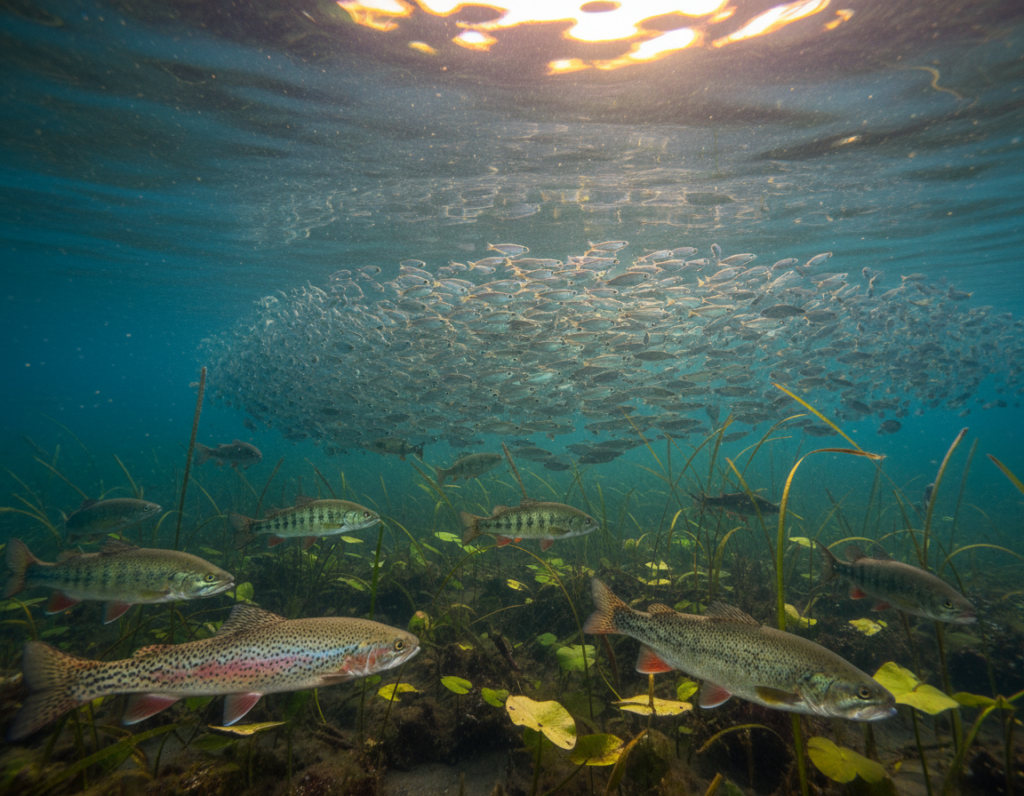
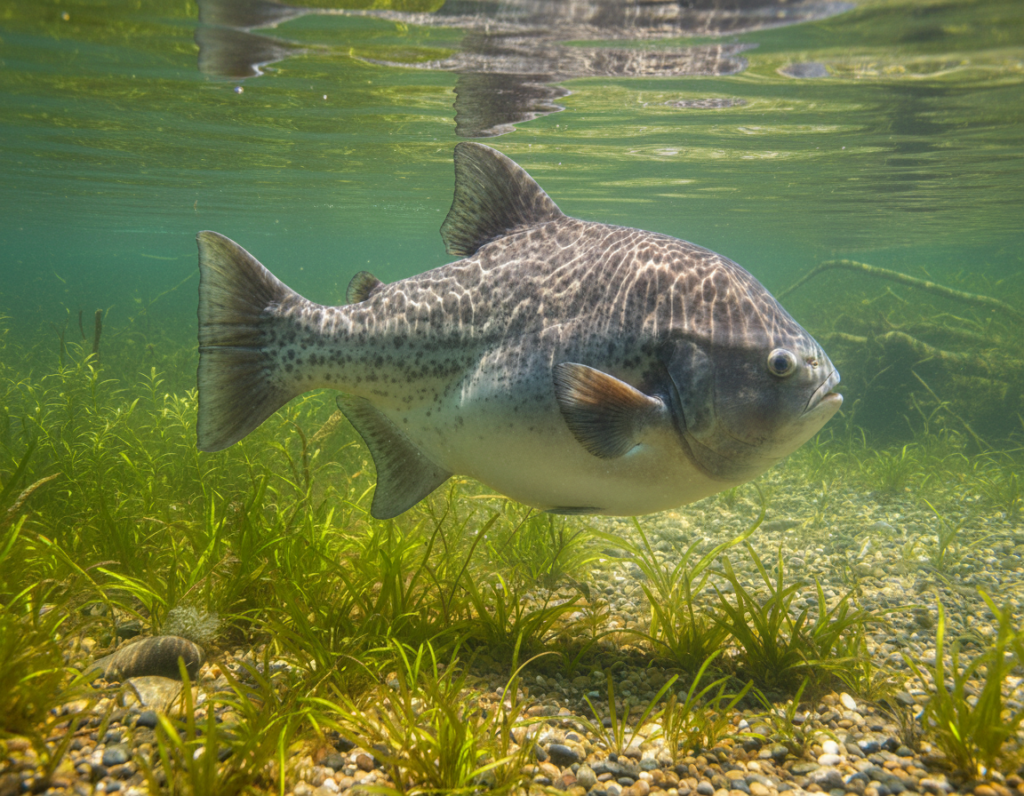
This article summarized a landmark study of Largemouth bass, Micropterus salmoides, tracked across nine consecutive seasons in a winter drawdown reservoir. Researchers used radiotelemetry and fine-scale habitat mapping to reveal long-term movement patterns and spatial clustering.
Findings showed how vegetation, structural complexity, and shifting water depth shaped fish use during spring, summer, and winter periods. The work highlighted seasonal selection, displacement events, and risks such as increased mortality during drawdown.
The research provided practical data for fisheries managers in the United States. By linking telemetry data to available areas, the study clarified how adult populations responded to human-driven water changes and natural cycles.
Understanding these movement patterns supports better management and conservation of freshwater populations across reservoir systems.
Understanding Bass Habitat Preferences
Ecological frameworks help explain why large game fish use certain parts of a reservoir at different times of year. These frameworks link resource availability, competition, and risk to observable site selection.
Ecological Principles
Ecology predicts that animals balance access to food with avoidance of rivals and predators. For adult bass, this often means choosing areas that reduce competition while keeping easy access to forage and cover.
The Role of Telemetry
The American Fisheries Society endorses rigorous methods, and telemetry has become central to modern studies. Tracking provides fine-scale movement and time-use data that clarify seasonal selection.
Researchers at Mississippi State University used long-term electrofishing and tracking to show how species partition space within reservoirs. That combined data helps managers understand displacement events, depth shifts, and risks such as increased mortality during drawdown.
In short, integrating ecology and telemetry delivers practical insight for freshwater fisheries management and for designing studies that improve population-level outcomes.
The Role of Submerged Aquatic Vegetation
Dense beds of submerged plants shape where juvenile and adult fish spend time in lakes and reservoirs. These areas provide cover from predators and rich invertebrate forage that supports early growth.
Evidence from multiple studies shows that vegetated zones strongly influence habitat selection during the summer period. Adults and young individuals both use plants for ambush points and slow-water foraging.
Aerial photograph interpretation remains a reliable method to quantify vegetation extent and predict where populations will concentrate. Mapping density helps managers anticipate movement and refuge sites when water levels change.
- Vegetation supplies shelter and ambush structure that alters daily movement patterns.
- Availability of plants is linked to successful recruitment of juvenile bass.
- Spatial maps of plant density improve management and reduce mortality during drawdowns.
“Submerged plant beds often act as the first line of defense and food production for young fish.”
Structural Complexity and Cover
Rocky shorelines and fallen timber create pockets of cover that strongly shaped where adults concentrated in many reservoirs.
Structural complexity drove daily movements more than depth during active periods. Researchers found riprap and submerged wood offered protection and ambush points that supported foraging in summer and reduced mortality risk in open water.
Importance of Riprap and Wood
The American Fisheries Society noted that complex shorelines were a central factor in habitat selection in impounded rivers. TVA studies and a State University project both showed adult fish used rocky bank and woody debris extensively.
Management action focused on maintaining structural diversity. Simple steps—adding brush bundles or protecting riprap—helped populations persist across seasons.
- Structural cover influenced daily movement and feeding behavior.
- Woody debris reduced predation risk and supported recruitment.
- Managers who preserved complexity saw lower mortality and healthier populations.
For practical guidance on maintaining shoreline complexity, see the structural diversity guidance.
Influence of Water Depth on Distribution
Depth gradients often acted as clear separators of where game fish spent time in the reservoir. Spotted bass tended to occupy deeper bands than largemouth or smallmouth, creating distinct depth zones by species.
Seasonal shifts in water level forced adults to change depth to retain access to cover and forage. In spring, many moved into shallows for spawning. In summer, they shifted deeper to find cooler, stable water and thermal refuge.
Telemetry and fine-scale mapping showed rapid drawdowns caused abrupt displacement and altered daily movement patterns. Such events increased stress and raised mortality risks when fish could not find suitable zones.
- Depth controls temperature, light, and where prey concentrates.
- Selection of specific depths reflected available forage and cover.
- Managers used depth data to predict likely areas of use and to limit harmful drawdowns.
“Understanding depth effects improved predictions of where populations would concentrate across seasons.”
Seasonal Movement Patterns
Telemetry uncovered recurring seasonal routes that link spawning flats, forage beds, and winter refuges. Long-term tracking showed adults moved predictably between these areas across years. That pattern helps managers plan for changing water levels and risk periods.
Spring Spawning Movements
In spring, adults migrated to shallow, protected flats to spawn. These moves were rapid and focused, often timed with rising water and warming temperatures.
Site fidelity was apparent: many individuals returned to the same shallow sites each year, according to telemetry data.
Summer Foraging
During summer, activity concentrated in vegetated zones and structurally complex shorelines. Fish used these areas for active foraging and daytime cover.
This seasonal use reflected selection for food-rich patches and cooler depths near cover, supporting growth and reproduction.
Winter Overwintering
Winter forced adults to congregate in discrete overwintering sites that served as a thermal refuge. Those areas were critical to survival when surface water cooled.
- Seasonal movements link spawning, foraging, and overwintering areas.
- Telemetry shows high inter-annual site fidelity to chosen sites.
- Concentration in winter areas raises risks of overexploitation and increased mortality.
“Managing seasonal movements is essential to reduce stress and protect key winter sites.”
Thermal Refuge and Environmental Stress
During extreme heat or cold, thermal refuge sites become essential for long-term survival in reservoirs.
Dissolved oxygen and stable temperatures strongly influence winter site selection by largemouth and other game species. Low oxygen can force adult fish to abandon familiar areas and seek pockets with better water quality.
In summer, many individuals move to deeper, cooler water to reduce metabolic stress. In winter, use of thermal refuge minimizes energy loss and lowers mortality risk during cold periods.
Telemetry and fine-scale mapping showed that displacement events often followed abrupt changes in temperature or oxygen. That data links environmental stress to altered movement patterns and higher population risk.
“Thermal refuge is a key component of habitat selection, allowing fish to escape temperatures that exceed their physiological limits.”
- Refuges buffer extreme swings in temperature and dissolved oxygen.
- Environmental stress can trigger rapid site shifts and crowding.
- Management that protects refuge areas reduces mortality and supports healthy populations.
Impact of Reservoir Drawdowns
Winter drawdowns often transform shallow shorelines into exposed flats, forcing fish to compress into limited pockets of water. This process removes the littoral zone that many species use for foraging and spawning.
When shallow areas vanish, adult bass and other fish concentrate in remaining deeper pools. That concentration raises competition and increases vulnerability to predators and angling pressure.
Studies and long-term telemetry data show that loss of near-shore structure also drives displacement and can raise mortality during harsh winter periods.
- Drawdowns reduce the total available habitat and shrink feeding areas.
- Concentration elevates stress, competition, and risk of overexploitation.
- Rapid water-level changes cause abrupt movements and site abandonment.
“Managing water levels to preserve littoral areas reduces displacement and supports healthier populations.”
Management that times drawdowns and protects key shallow zones can limit negative effects on movement, survival, and long-term population stability.
Forage Availability and Feeding Sites
Availability of schooling prey often dictated fine-scale feeding locations in reservoirs. Shad were a primary forage for many adult predators, and their distribution drove site selection across seasons.
Feeding sites clustered where structural cover or vegetation met open water. Those edges let an ambush predator conserve energy while intercepting moving prey.
During the summer period, adults tracked forage as shad moved with temperature and depth. That movement caused predictable shifts in where fish concentrated and the times they foraged.
Selection of a feeding site balanced food access against risk and environmental stress. Managers used telemetry and fine-scale data to link prey distribution to fish movements and to reduce mortality during displacement events.
“Forage availability is a primary driver of where predators will feed and how populations use reservoir areas.”
- Forage drives habitat selection and seasonal site use.
- Structural cover increases feeding efficiency and reduces exposure.
- Understanding prey patterns helps management protect key feeding areas.
Behavioral Differences Between Bass Species
Where largemouth, smallmouth, and spotted overlap, each species exploits unique microzones to persist.
Research from Mississippi State University showed that segregation by zone reduces competition. Diets often overlap, but spatial selection lets multiple species share the same reservoir.
Largemouth typically use vegetated, slack-water areas with shallow cover. Smallmouth favor rocky substrates and moderate currents near shorelines.
Spotted fish occupy an intermediate niche. They tend to use deeper water and faster currents than largemouth in natural streamlike areas.
These behavioral differences shape daily movement and seasonal use. Understanding species-level variation helps managers limit displacement and reduce mortality during drawdowns and summer stress.
“Segregation by microhabitat supports coexistence and stabilizes populations across seasons.”
- Segregation reduces direct competition and supports sustained populations.
- Telemetry and fine-scale mapping provide crucial data for site-level management.
- Managers use knowledge of depth and flow selection to protect key areas in multi-species systems.
Site Fidelity and Homing Instincts
Long-term tracking highlighted consistent homing behavior to specific zones within the reservoir. Telemetry data showed many adult individuals returned to the same overwintering and spawning sites year after year. This repeat use reduced time spent searching and supported stable seasonal use patterns.
Homing instincts also helped fish recover after displacement events. When water levels or management actions forced movement, individuals often navigated back to familiar areas. That tendency lowered stress and, in some cases, reduced mortality compared to fish that failed to relocate.
Management implications are clear: protecting critical sites preserves population resilience. Conserving known spawning flats and winter pockets maintains the movement habitat that supports life stages across seasons.
- Site fidelity drives repeated use of specific areas for spawning and overwintering.
- Homing enables return after displacement, aiding survival.
- Protecting these sites supports long-term population stability and reduces mortality risk.
Effects of Anthropogenic Disturbance
Regulated water levels and engineered shorelines have fragmented areas that fish relied on for spawning and refuge.
Dam construction and reservoir operations altered natural movement habitat, forcing many adult individuals to change routes and timing. This fragmentation reduced access between spawning flats, summer feeding zones, and winter refuges.
Urban runoff and land-use change further degraded water quality. Poor water quality increased stress and raised disease risk, contributing to higher mortality in some populations.
Loss of shoreline complexity removed woody debris and shallow cover that support growth and survival. Without these structures, displacement events during drawdown became more frequent and more harmful.
“Mitigating human-induced impacts is essential to preserve linked sites that sustain seasonal movements.”
Management actions that restore connectivity, protect littoral structure, and limit abrupt level changes helped reduce displacement and supported resilient populations. Integrating telemetry and fine-scale mapping into planning improves selection of priority areas for protection.
Juvenile Habitat Requirements
Juveniles rely on complex nearshore patches to avoid predators and grow quickly. Young-of-the-year congregation often centers on shallow, vegetated shorelines where food and cover overlap.
Early survival depends on shelter and abundant invertebrates. These areas lower mortality risk during the first critical months.
Requirements differ from adults. Young fish favor dense vegetation and warm, shallow water. As they grow, they shift to deeper, structured zones that support adult foraging and movement.
Selection of nursery sites affects recruitment and long-term population size. Protecting these nursery areas in reservoirs reduces displacement impacts and improves management outcomes.
- Juveniles prioritize protection over open-water foraging.
- Shallow vegetated areas supply food and refuge in spring and summer.
- Conserving nursery zones supports healthy future populations.
“Protecting nursery areas where young congregate is essential for future recruitment.”
Water Quality and Chemical Factors
Oxygen, pH, and temperature create a chemical landscape that guides fish movement and site use. Dissolved oxygen and temperature determine whether an area of water is suitable in spring, summer, or winter. Low oxygen zones force adults to shift depth or compress into limited pockets.
Contaminants matter too. Heavy metals and toxic discharges can accumulate in tissue and raise long-term mortality risk. Poor chemical conditions reduce reproductive success during the critical spring spawning period.
Monitoring water quality provides the data managers need to detect threats and to protect thermal refuge areas. Cooler, deeper pockets may offer different oxygen profiles than surface layers and become critical in heat or low-flow events.
- Water quality drives habitat selection; fish avoid low-oxygen or polluted zones.
- pH and temperature affect egg and larval survival during spring.
- Regular monitoring helps management limit contaminants and nutrient loading.
“Maintaining high water quality standards ensures populations have safe areas to live and reproduce.”
Management Strategies for Healthy Populations
Practical strategies for sustaining healthy populations center on protecting critical sites and using real-time movement data to guide decisions in a reservoir.
The american fisheries society offers guidance that managers apply to reduce avoidable losses and keep spawning and overwintering areas intact.
Adaptive approaches use telemetry and near-real-time tracking so teams can alter water levels or closures before stress peaks. That responsiveness lowers crowding and reduces mortality during high-risk periods.
Core actions include:
- Protecting known spawning and overwintering sites through seasonal closures and shoreline safeguards.
- Using movement data from the latest study to inform timely adjustments in drawdown timing and flow.
- Engaging stakeholders so anglers, agencies, and researchers share data and align goals.
- Applying adaptive rules to reduce impacts during summer thermal stress and to limit displacement events.
The american fisheries community and the broader fisheries society endorse monitoring and science-led selection of priority areas. Implementing these steps helps preserve bass populations and makes the article’s findings useful for on-the-ground management.
Future Research Needs in Fisheries Ecology
Long-term monitoring must now expand to track how changing climates reshape reservoir communities over decades. A focused multi-year study will reveal slow shifts in distribution, seasonal use, and risk.
Researchers should prioritize work that links warming trends to changes in spring and summer behavior and to winter refuge loss. This will improve predictions of crowding and increased mortality.
There is a clear need to examine cumulative stressors. Studies should test combined effects of habitat loss, chemical contamination, and altered flow regimes on bass populations.
- Project long-term climate impacts on distribution and seasonal selection.
- Quantify cumulative effects of structural loss and contaminants.
- Compare how different species adapt in managed reservoirs over decades.
- Improve tracking of movement and site selection to inform conservation.
By prioritizing these directions, the scientific community can produce actionable data that supports managers. This article calls for coordinated, multi-disciplinary research to protect future populations.
Conclusion
The study’s long-term tracking and fine-scale maps turn complex results into clear management priorities. Telemetry and repeated observations show where protections will have the most impact across spring, summer, and winter seasons.
The review integrates guidance from the American Fisheries Society and the wider fisheries society. It highlights how protecting key sites, timing drawdowns carefully, and preserving structure reduce displacement and lower mortality for bass populations.
Effective action requires ongoing data sharing, adaptive rules, and targeted restoration. Continued research and collaboration will keep this article’s findings useful and help managers sustain healthy populations into the future.