Understanding seasonal shifts gives anglers a clear edge. The guide explains how changes in water and temperatures shape behavior throughout year. It shows why timing and location matter for consistent success.
As water temperature shifts, many species change depth and feeding habits. These movement patterns force anglers to adapt baits and techniques. Knowing where bass and other sport species hold in spring, summer, fall, and winter saves time.
Largemouth bass often alter habitat preference when the temperature or food supply changes. Rivers and large reservoirs each present unique cues. Anglers who read those signals can pick the best time to fish.
This section sets the stage for practical tips that follow. It highlights how biology, bait availability, and environment combine to guide behavior. Mastering these cycles turns fishing from guesswork into strategy.
The Science Behind Seasonal Fish Movement
Cold-blooded species adjust activity as water heats or cools, driving predictable shifts in behavior. Understanding these drivers gives anglers a scientific edge when planning time on the water.
Metabolic Responses to Temperature
Because internal temperature tracks water temperature, metabolic rates rise in warm months and fall in cold ones. Higher metabolism means more active feeding and a greater need for food.
The Role of Daylight and Forage
Daylight changes set feeding windows and spawning cues across the year. Vegetation growth in spring and summer alters cover and draws baitfish, which in turn guides where species seek food.
- Temperature controls activity: warmer water increases chase behavior; cold water slows pursuit.
- Light cycles set the clock for feeding and spawning times that anglers can target.
- Forage and vegetation determine the most productive areas and best baits or lures to use.
Spring Transitions and Spawning Activity
When days lengthen and water warms, anglers see fish move into nearshore areas to feed and stage for spawn. This transition ends the slow winter period and kicks off heightened activity among many sport species.
Largemouth bass often gravitate to sunny banks, shallow vegetation, and protected coves where water warms fastest. These zones act as staging areas where bass feed aggressively before spawning.
Walleye, by contrast, tend to travel upriver, along wind-blown shorelines, or across shallow flats as they prepare for spring runs. Targeting these corridors yields excellent fishing opportunities.
- Shallows warm first and concentrate forage, so many species feed hard during this period.
- Identifying sunny flats and protected coves helps anglers find active bass and cruising walleye.
- Timing is essential: locate staging areas to increase catch rates before the spawn.
For more on presenting lures to staging bass in early spring, see spring smallmouth bass techniques.
Summer Heat and Deep Water Positioning
Summer sun pushes many sport species into cooler, deeper water where they wait out the heat. Anglers must shift strategy to locate those mid-water holding zones and read changing conditions.
Understanding Thermoclines
Thermoclines form clear temperature breaks in large reservoirs. These layers often become the most productive depth for bass and trout during the hottest months.
Targeting Shaded Structure
Shaded docks, overhanging trees, and deep vegetation attract bass that avoid direct sun. Using braided lines helps anglers pull fish out of heavy cover without losing leverage.
Timing Feeding Windows
Dawn and dusk remain the best times for feeding activity. Midday is slow when surface temperatures peak, so plan trips for morning or evening to improve catch rates.
- Use deep-diving crankbaits to reach suspended depths along the thermocline.
- Monitor water temperatures and sonar to find comfortable depth ranges for different species.
- Adjust baits and lures for slower presentations when heat reduces aggression.
Fall Feeding Surges and Migration
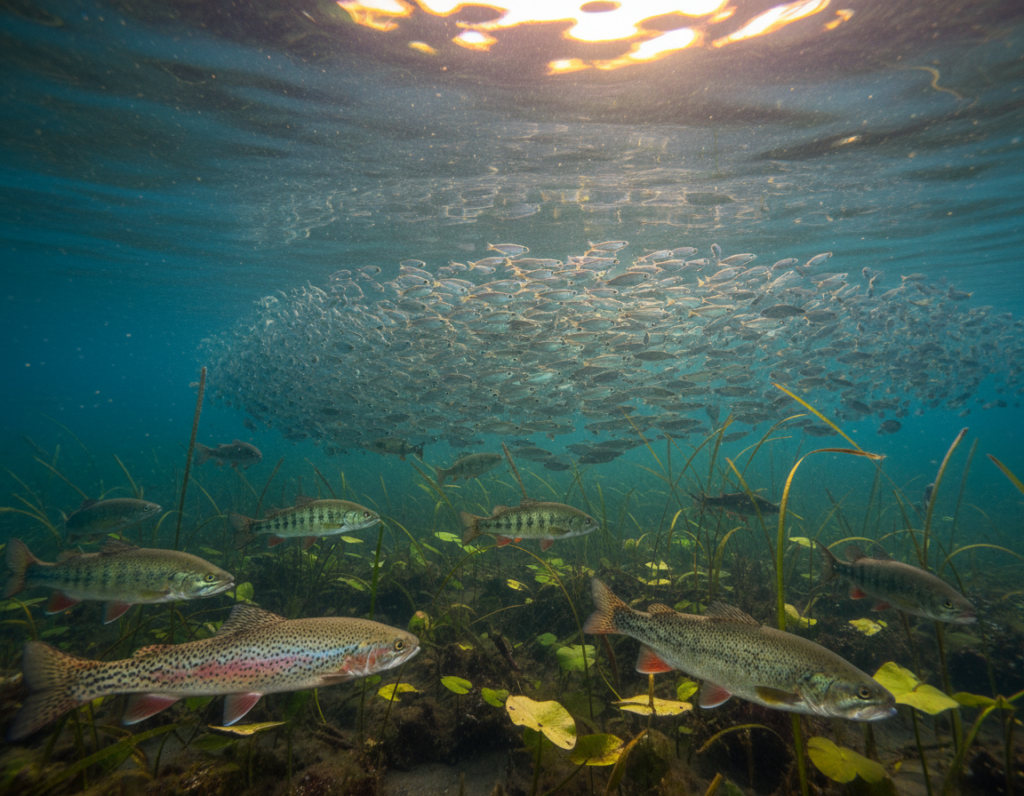
Cooler days in autumn kick predators into a feeding sprint as they bulk up for winter. Bait schools compress near shorelines and create clear strike zones that anglers can read.
Following Prey to Strike Zones
Tracking baitfish is the most direct way to find bass and other predators. As the water cools, these prey schools move along flats, points, and pockets, and hungry hunters follow.
The fall period often produces aggressive feeding windows during the day and at low-light hours. Anglers should stay mobile and shift areas quickly to match the prey’s path.
- Present lures that match local baitfish: lipless crankbaits and small swimbaits mimic size and color well.
- Use topwater baits: increased surface activity can trigger explosive strikes in shallow zones.
- Work mid-depth areas: cooling waters reduce deep holding, so target mid-column and shallow covers.
Winter Metabolism and Slow Presentation Tactics
In winter, most catchable populations slow down and tuck into stable, deep holding spots.
Cold water temperatures drop metabolic rates, so anglers must change how they fish. Most species gather in deep basins, channels, or holes where the temperature stays steadier.
Slow, deliberate presentations work best. Use small baits, jigs, and subtle lures fished near the bottom to tempt lethargic bass and other species.
- Focus on deep areas and specific depths rather than covering open water.
- Keep retrieves slow and pause often to mimic inactive prey.
- Use a sensitive rod and feel for subtle taps; bites are light in these conditions.
Understanding that fish concentrate in stable areas saves time and fuel. Patient, finesse techniques during the cold months can still produce strong results for anglers willing to slow down.
Essential Gear Adjustments for Every Season
A small change in rod power or line type can transform a slow outing into a successful day on the water.
Spring favors medium or medium-light rods for finesse presentations. Lighter lines and smaller hooks help avoid spooking bass in clear, shallow water.
Summer often requires medium-heavy rods and stronger lines to control fish in heavy cover or at depth. Anglers should pack deep-diving crankbaits and sturdy braid for power and reach.
Fall calls for versatility. A medium-power rod handles a range of retrieves and lets anglers work crankbaits and swimbaits as baitfish move through areas.
Winter demands sensitivity. Use a sensitive rod with fluorocarbon lines to detect subtle taps. Slow jigs and small baits imitate lethargic prey and trigger tentative strikes.
Maintaining a well-rounded tackle box lets anglers switch quickly between lures and presentations as seasons and temperature change. Investing in the right gear improves success and makes fishing more enjoyable.
- Adjust gear by season to match behavior of target species.
- Match lures and baits to local forage and conditions.
- Keep spare lines and tips so changes are fast on the water.
Reading Environmental Cues for Better Results
Simple shifts in wind and moon phase often tell more about feeding windows than a charted map.
Wind, light, and current guide where baitfish and plankton gather. Predators like bass and trout concentrate along wind-blown banks or points where food piles up.
Moon phases change light and subtle tides. That can boost feeding before or after key spawn windows in spring and fall.
Anglers who monitor water temperature and short-term weather see when species shift from shallow to deep. Low-pressure systems often trigger a brief feeding surge before a storm.
- Watch birds and baitfish to find active pockets quickly.
- Use wind direction to target cloudy points and productive waters.
- Fish early morning and late evening when light favors feeding.
Combining these cues with seasonal patterns and proper baits or lures gives a reliable way to improve fishing year-round.
Conclusion
Success follows anglers who match presentations to the rhythms of their local waters. Observing patterns and noting how species respond helps turn occasional trips into steady results throughout year.
They should adapt techniques as water and forage change, using varied lures and subtle retrieves to learn local nuances. Each species shows unique habits, so careful observation builds a sharper, more strategic approach to fishing.
Continued experimentation refines timing and tackle choices. Embracing natural cycles makes the sport more rewarding and keeps anglers productive no matter the season.